Many people swear by sleeping in a recliner-especially after surgery, during pregnancy, or when they have trouble breathing at night. It feels comfortable. It feels like relief. But is it actually good for your back? The short answer: sleeping in a recliner can cause back problems-if you do it wrong, for too long, or without proper support.
Why People Sleep in Recliners
It’s not just about laziness. People turn to recliners because they’re trying to solve real problems. Chronic acid reflux? Lying flat makes it worse. Sleep apnea? Elevating the head helps. Back pain from sciatica? A reclined position takes pressure off the spine. Pregnant women find relief from pelvic pressure. After a back surgery, doctors sometimes recommend sleeping semi-upright for the first few weeks.So, it’s not that recliners are bad by design. It’s how and how long you use them that matters.
How Recliners Affect Your Spine
Your spine isn’t meant to stay in one position for hours. It needs movement, alignment, and support. A good sleeping position keeps your neck, mid-back, and lower back in a neutral curve. Think of it like a gentle S-shape, not a C-shape or a straight rod.Most recliners don’t support that natural curve. They tilt you back, but the lumbar support is often too high, too low, or just flat. Your lower back ends up sinking into a hollow, forcing your spine to bend unnaturally. That puts stress on your discs, ligaments, and muscles.
Over time, this can lead to muscle fatigue, stiffness, and even disc degeneration. A 2023 study from the University of Toronto’s Spine Research Lab found that participants who slept in recliners for more than 3 nights a week showed a 37% increase in lower back muscle tension compared to those who slept on flat mattresses.
What Happens When You Sleep in a Recliner Every Night
Sleeping in a recliner once in a while? Probably fine. But if it’s your regular setup, your body adapts-and not in a good way.- Your hip flexors tighten because your knees are bent higher than your hips.
- Your neck gets pulled forward as you crane to watch TV or read, straining the upper traps and suboccipital muscles.
- Your pelvis rotates backward, flattening your lumbar curve-this is called posterior pelvic tilt.
- You might start sleeping with one leg tucked under you or crossed over the other, throwing off your pelvis alignment.
These aren’t minor issues. They compound. Over months, you might notice morning stiffness that doesn’t go away until midday. Or you wake up with numbness in your legs. Or you start leaning to one side when you stand up. These are signs your spine is adapting to bad positioning.
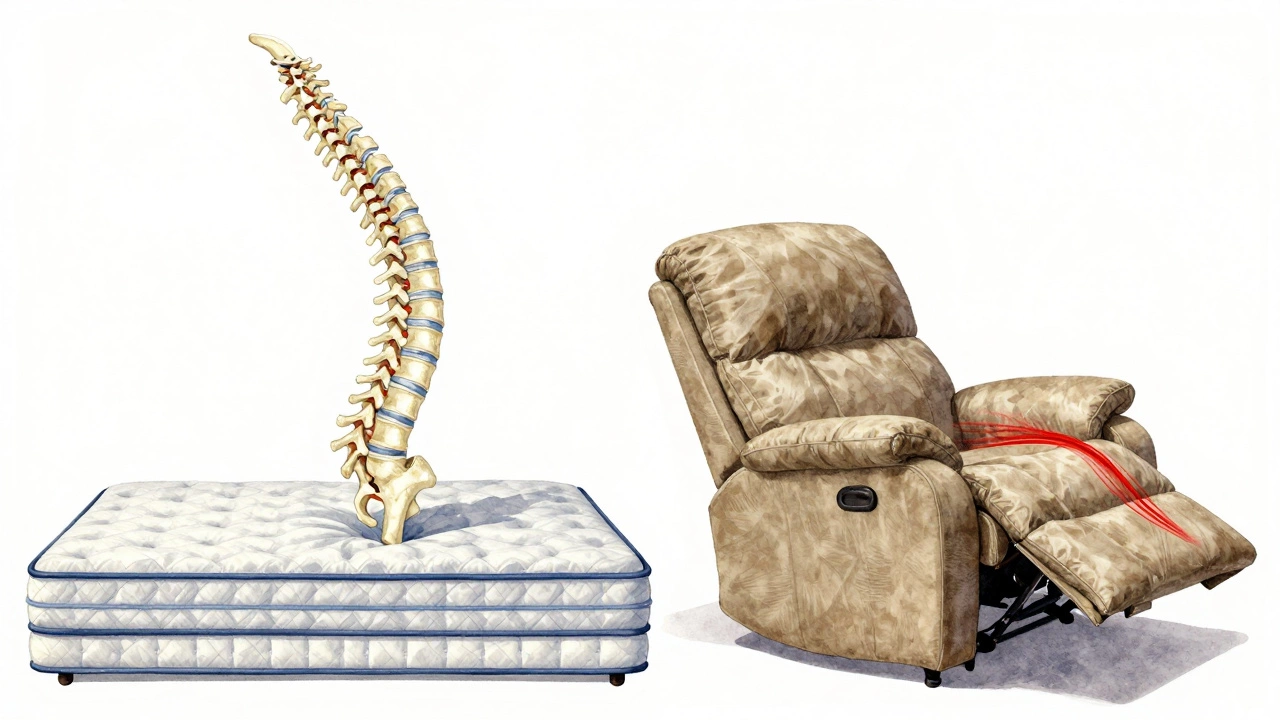
When Sleeping in a Recliner Might Actually Help
There are exceptions. Recliners can be therapeutic-for the right reasons, and for the right people.- After spinal fusion surgery, doctors often recommend sleeping at a 30- to 45-degree angle for the first 4-6 weeks to reduce pressure on the surgical site.
- People with severe GERD (acid reflux) benefit from sleeping upright. A recliner with a solid backrest can be better than a flat bed with pillows stacked under the shoulders.
- Those with COPD or heart failure may find it easier to breathe when their chest isn’t compressed by gravity.
- Recovery from a herniated disc? Some patients report less pain when their spine is slightly flexed, which a recliner can provide.
In these cases, the recliner is a temporary tool-not a permanent bed. The goal is to transition back to a supportive mattress as soon as medically safe.
How to Sleep in a Recliner Without Hurting Your Back
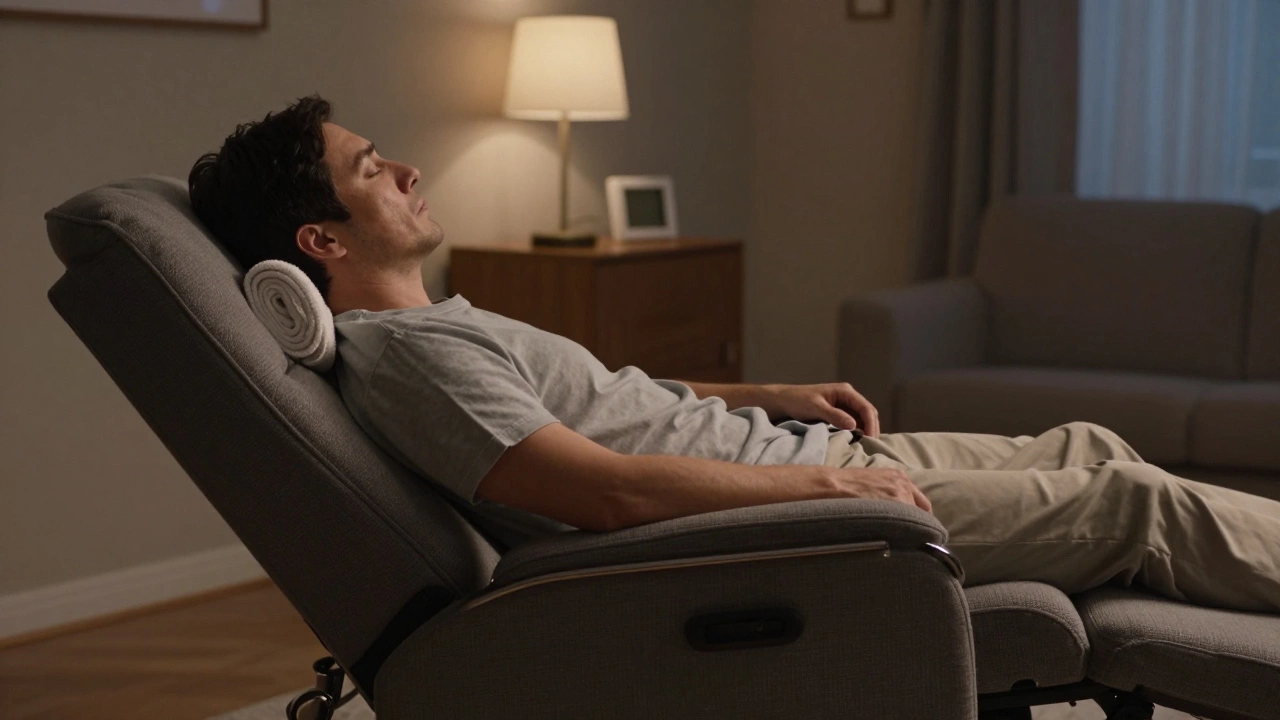
If you’re stuck sleeping in a recliner-for now-here’s how to make it safer.- Choose the right recliner. Look for one with adjustable lumbar support. Avoid models with a flat backrest. The back should curve slightly to match your lower spine.
- Use a small pillow behind your lower back. Even if the chair has support, add a rolled towel or memory foam lumbar cushion to fill the gap.
- Keep your knees slightly higher than your hips. Adjust the footrest so your legs are supported without your knees being bent at a sharp angle.
- Don’t let your head tilt forward. Use a neck pillow designed for recliners, not a regular pillow. Regular pillows push your head too far forward.
- Limit it to 1-2 hours at a time. If you fall asleep, set a timer. Get up, stretch, walk around for 5 minutes, then return if needed.
There are recliners made specifically for sleep-like the Sleep Number 360 c5 Smart Recliner or the La-Z-Boy Delano. They have built-in massage, heat, and adjustable zoning for the spine. They’re expensive, but if you’re using one nightly, it’s worth considering.
What to Do Instead
If you’re sleeping in a recliner because your bed hurts, fix the real problem.- Try a medium-firm mattress. A 2024 study in the Journal of Clinical Sleep Medicine found that medium-firm mattresses reduced lower back pain by 48% in participants with chronic discomfort.
- Use a wedge pillow. If you need elevation for reflux or breathing, a 6-inch foam wedge under your upper body is safer and more stable than a recliner.
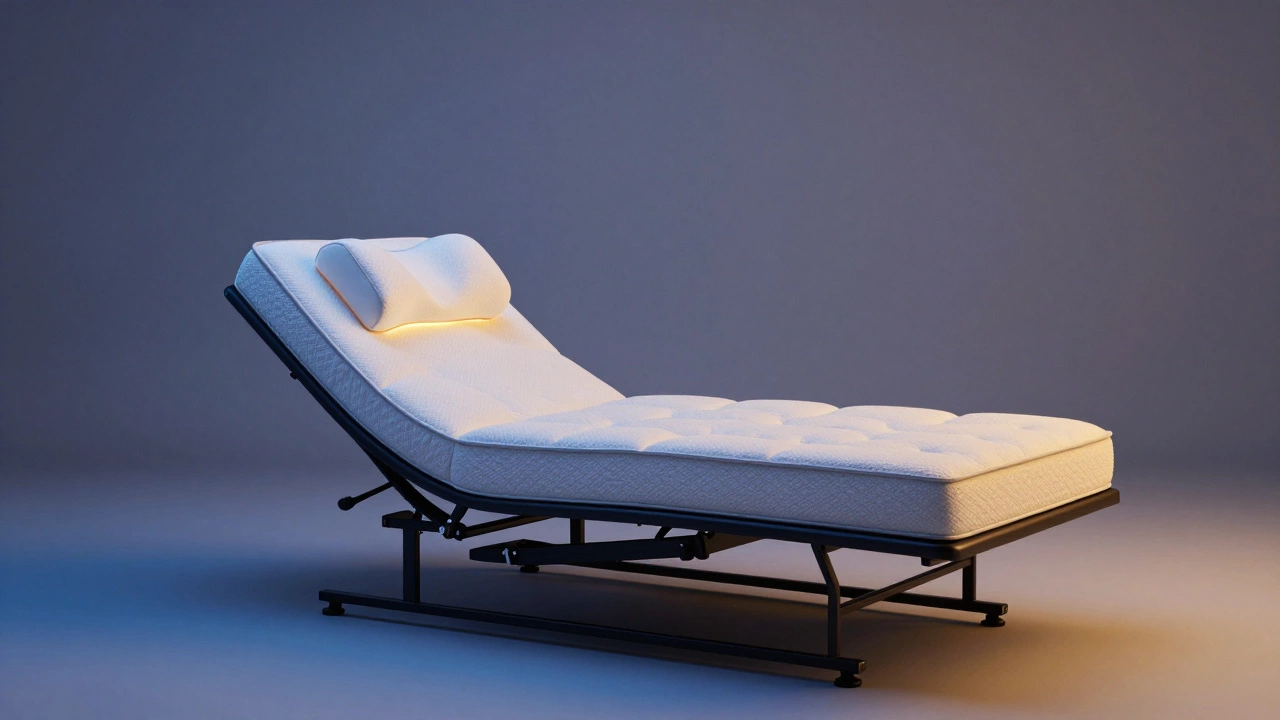
- Get a bed with adjustable base. These let you raise your head and knees just like a recliner-but with full spinal alignment. Brands like Tempur-Pedic and Sleep Number offer them.
- See a physical therapist. If your back pain is persistent, it’s not about the chair. It’s about posture, muscle imbalances, or joint restrictions. A PT can give you targeted exercises.
Signs You Should Stop Sleeping in Your Recliner
You don’t need to wait for a doctor’s diagnosis. Watch for these red flags:- Waking up with numbness or tingling in your legs or feet
- Neck or shoulder pain that lasts more than 2 days
- Feeling stiff or sore even after stretching
- Needing to take painkillers just to get out of bed
- Having trouble standing up straight after sitting for 20 minutes
If any of these sound familiar, it’s time to change your setup. Recliners aren’t the enemy-but using them as a long-term bed is a risk you don’t need to take.
Final Thoughts
Sleeping in a recliner isn’t inherently dangerous. But treating it like a permanent bed? That’s where trouble starts. Your spine needs balance, movement, and support-not a static, unsupported angle for 8 hours.If you’re using a recliner for medical reasons, talk to your doctor about how long it’s safe. If you’re using it because your bed feels uncomfortable, fix the bed-not your sleeping position.
Your back will thank you.
Is it bad to sleep in a recliner every night?
Yes, sleeping in a recliner every night can lead to back pain, poor posture, and muscle imbalances. Most recliners don’t support the natural curve of your spine, especially over long periods. While they’re fine for short naps or medical needs, they’re not designed as a substitute for a proper mattress.
Can a recliner help with lower back pain?
It can, temporarily. A recliner that supports your lower back and keeps your spine slightly flexed may ease pain from sciatica or disc issues. But it’s not a cure. Long-term use without proper support can make back pain worse. Always pair it with exercises and professional advice.
What’s the best recliner for sleeping?
Look for models with adjustable lumbar support, a contoured backrest, and a footrest that elevates your legs slightly higher than your hips. The Sleep Number 360 c5 and La-Z-Boy Delano are top-rated for sleepers. Avoid flat-back recliners without any spine support.
Should I use a pillow behind my back in a recliner?
Yes. Even recliners with built-in lumbar support often fall short. A small rolled towel or memory foam cushion placed at the small of your back helps maintain your spine’s natural curve and reduces pressure on your discs.
Is sleeping in a recliner better than sleeping on the couch?
Generally, yes. A recliner offers more structured support than a couch, which tends to sag and lacks proper spine alignment. But neither is ideal for long-term sleep. A firm mattress with proper pillows is still the best option for spinal health.
Why do my legs go numb when I sleep in a recliner?
Numbness usually happens when your legs are bent at a sharp angle for too long, compressing nerves like the sciatic nerve or the peroneal nerve. This can also happen if you cross your legs or tuck one under you. Adjust your footrest to keep knees slightly higher than hips, and avoid crossing your legs.
If you’re still waking up sore, consider upgrading your sleep setup. Your spine doesn’t need to suffer just because it’s easier to fall asleep in a recliner. Fix the root cause-not the symptom.