Back Pain from Recliner: Causes, Fixes, and What to Do Next
When your back pain from recliner, discomfort caused by prolonged or improper use of a reclining chair that strains the spine, lower back, or hips hits, it’s not just annoying—it’s a signal your chair isn’t working for you. A recliner should support, not sabotage. But too many people sit in them all day, lean too far back, or let their legs dangle, turning what’s meant to be a comfort into a source of chronic pain. This isn’t about bad luck—it’s about how you use it.
The real issue isn’t the recliner itself, but how it’s designed or adjusted for your body. recliner posture, the way your spine and joints align when seated in a reclining chair matters more than brand or price. If your lower back isn’t supported, your pelvis tilts backward, and your spine curves unnaturally, you’re putting pressure on discs and nerves. That’s why people wake up stiff or feel sharp pain after just 20 minutes. sitting posture, how your body positions itself when seated, especially over long periods in a recliner is just as critical as posture at a desk. And recliner chair health, the overall impact a recliner has on your physical well-being through alignment, support, and movement isn’t just about avoiding pain—it’s about preventing long-term damage like sciatica, disc degeneration, or muscle imbalances.
It’s not just about sitting right. It’s about how the chair fits your body. Too much recline? Your spine loses its natural S-curve. Feet dangling? Blood flow gets cut off, and your lower back bears extra weight. No lumbar support? Your muscles work overtime just to stay upright. These aren’t minor tweaks—they’re the difference between relief and worsening pain. And if you’re using your recliner to sleep every night, you’re doubling down on the problem. Experts agree: occasional use is fine. Daily use? That’s a red flag.
What you’ll find below isn’t a list of products to buy. It’s a collection of real, practical fixes—based on what people actually experience. From how to adjust your current chair to why your legs ache even when you’re not moving, these posts cut through the noise. You’ll learn what makes a recliner help—or hurt—your spine, how to fix common mistakes without spending a dime, and when it’s time to walk away from that chair for good. No fluff. No marketing. Just what works.
-
Quentin Melbourn

- 4 December 2025
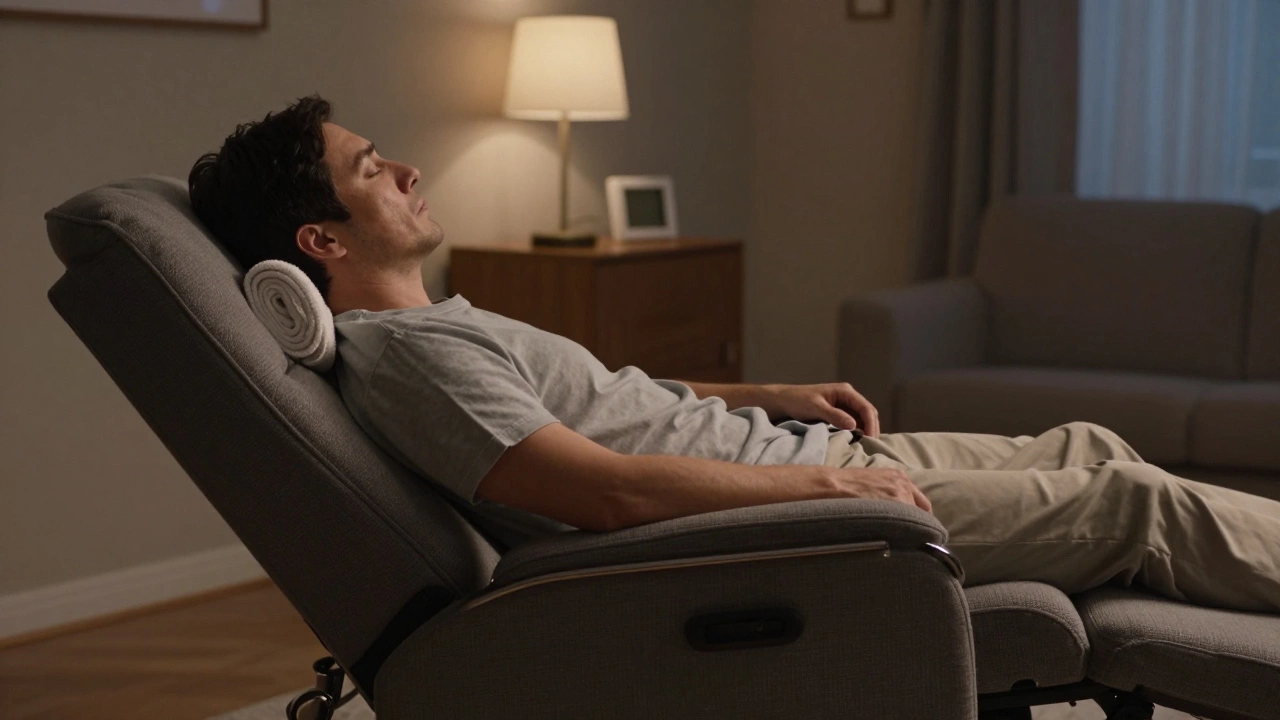
Can Sleeping in a Recliner Cause Back Problems?
Sleeping in a recliner can offer temporary relief for back pain or breathing issues, but doing it nightly may cause long-term spinal problems. Learn how to use it safely-or switch to a better solution.
Popular Posts


Categories
Tag Clouds