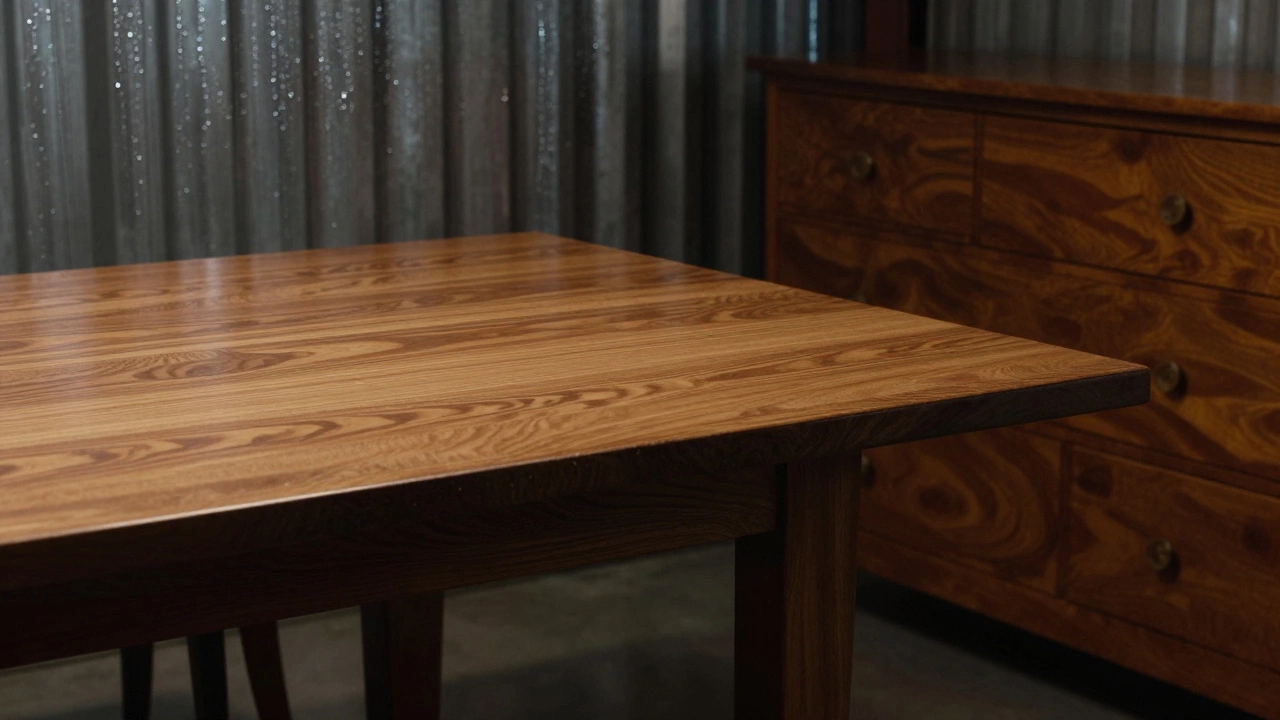
Furniture Storage Risk Assessment Tool
Use this tool to determine if your furniture is at risk of warping or damage based on your current storage setup. Select the options that best describe your situation.
Risk Assessment
Recommended Action:
Enter your details and click "Assess Risk Level" to see your results.
You’ve spent a small fortune on a solid oak dining table or a vintage mahogany dresser, and now you have to move. The easiest option seems to be tossing everything into a local storage unit and checking on it in six months. But here is the scary part: wood is a living material. It breathes, expands, and contracts. If the air in that unit is too dry or too damp, your prized pieces can literally bend, crack, or buckle. Yes, furniture warping is a very real risk, but it isn't inevitable if you know how the science of wood works.
Quick Takeaways for Furniture Safety
- Humidity is the enemy: Extreme swings in moisture cause wood to swell or shrink, leading to warps.
- Climate control is a must: For high-value wood, avoid "drive-up" units and go for temperature-regulated spaces.
- Airflow matters: Never push furniture flush against cold concrete walls.
- Protection is key: Use breathable covers, not plastic wrap, which can trap moisture and cause mold.
Why Wood Warps in Storage
To understand why this happens, we have to look at the material itself. Wood is a hygroscopic material, meaning it actively absorbs and releases water from the surrounding air . When the air is humid, the wood cells soak up moisture and expand. When the air is bone-dry, that moisture leaves, and the wood shrinks. The problem is that wood doesn't shrink or expand evenly. The grain, the density, and the way the piece was cut all react differently.
Imagine a heavy tabletop. If the top layer dries out faster than the bottom layer, the internal tension pulls the wood into a curve. This is called "cupping." In a standard storage unit that isn't regulated, the temperature can swing 40 degrees between noon and midnight. This constant "breathing" puts immense stress on the joints and the flat surfaces, eventually leading to a permanent bend that no amount of sanding can fix.
Climate Controlled vs. Standard Storage
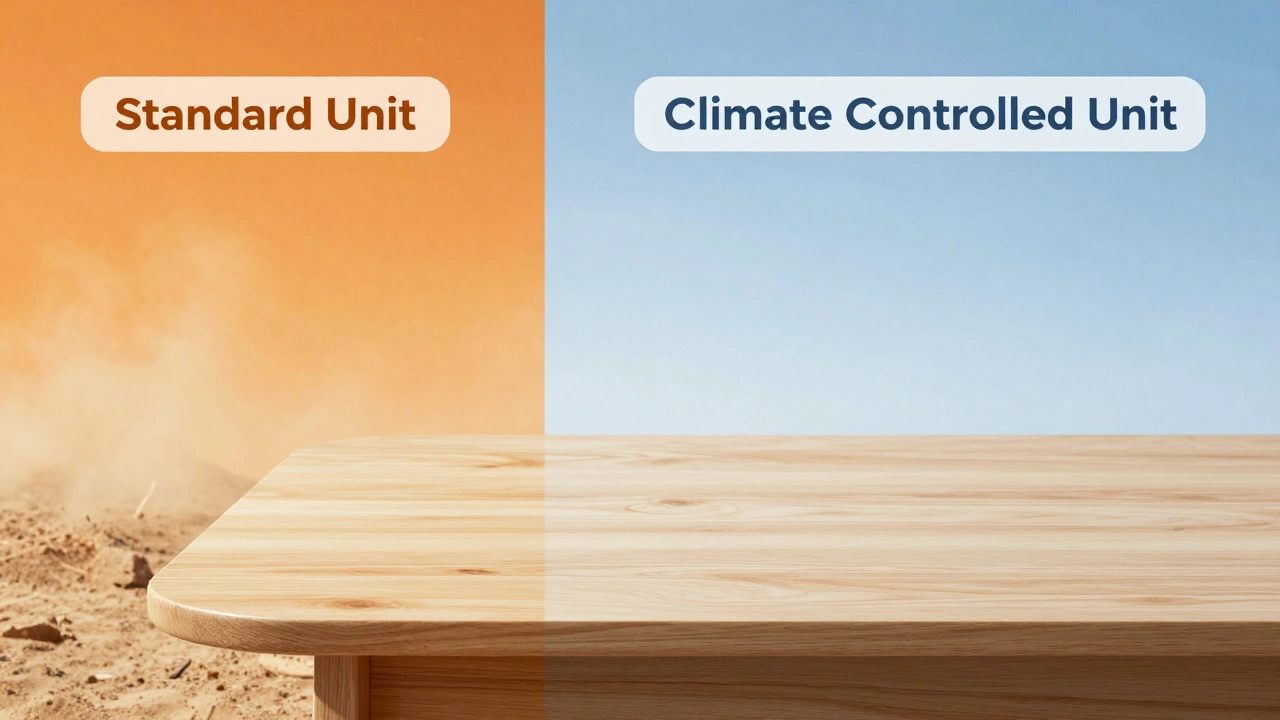
If you're storing a cheap IKEA particle-board desk, a standard unit might be fine. But for real wood, you need to understand the difference between storage types. A standard unit is essentially a metal box. In the summer, it becomes an oven; in the winter, it's a freezer. This is where the most dramatic warping occurs.
Climate Controlled Storage is a facility that maintains a consistent temperature and humidity level, usually between 60-80 degrees Fahrenheit and 30-50% humidity . This stability prevents the wood from undergoing the rapid expansion and contraction cycles that lead to warping. If you are storing antiques, heirlooms, or solid hardwoods, this isn't a luxury-it's a requirement.
| Feature | Standard Drive-Up Unit | Climate Controlled Unit |
|---|---|---|
| Temperature Stability | Fluctuates with weather | Constant / Regulated |
| Humidity Control | None (High risk of damp/dry) | Managed (Low risk) |
| Warping Risk | High | Very Low |
| Price Point | Budget-friendly | Premium |
| Best For | Plastic bins, metal tools | Solid wood, leather, art |
The Danger of Plastic Wrap and Vacuum Sealing
A common mistake people make is wrapping their furniture in heavy-duty plastic stretch wrap to "protect" it from dust. In a storage environment, this is often a disaster. Plastic is non-breathable. If there is any moisture trapped inside the plastic when you wrap it, or if condensation forms due to temperature changes, that moisture has nowhere to go. It sits against the wood, creating a perfect breeding ground for mold and mildew.
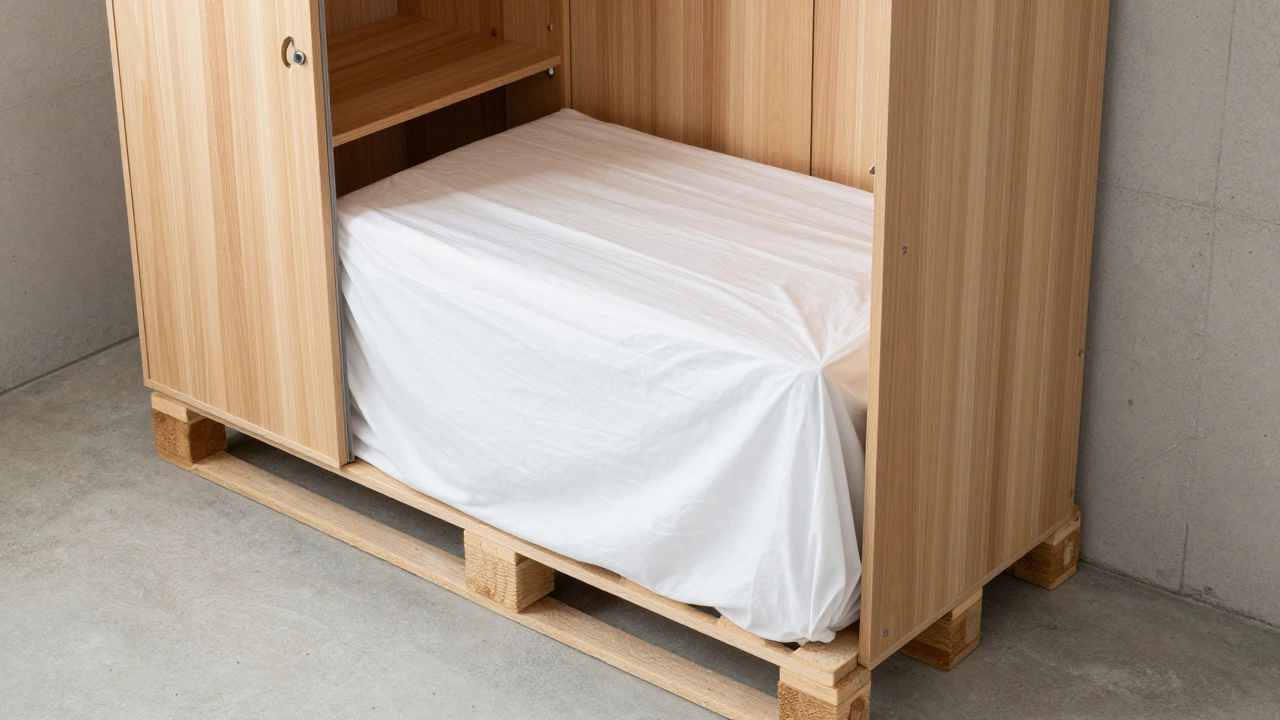
Moreover, trapping moisture against the wood can cause localized swelling. You might find that your table didn't warp overall, but you have "bubbling" or discoloration in the finish where the plastic clung to the surface. Instead of plastic, use Cotton Breathable Covers or old bedsheets. These protect the piece from dust while allowing the wood to equalize its moisture with the air.
How to Pack Your Furniture to Prevent Bending
How you position your furniture in the unit is just as important as the air quality. Gravity and pressure play a huge role in whether a piece stays straight. If you lean a large mattress or a heavy dresser against a wall at an angle, the constant pressure over several months can cause the frame to bow.
- Keep it Level: Always store tables and desks flat. Never lean a tabletop vertically against a wall for long periods, as the weight of the piece can cause it to sag or warp under its own gravity.
- Avoid the "Wall Chill": Concrete walls in storage units can be significantly colder or damper than the air in the center of the room. Leave a 2-3 inch gap between your furniture and the walls to allow air to circulate.
- Use Risers: Don't put solid wood directly on a concrete floor. Concrete can "wick" moisture up into the legs of your furniture. Use wooden pallets or pieces of thick cardboard to create a barrier.
- Remove Heavy Items: If you're storing a bookshelf, take the books out. The constant downward pressure of heavy books on a shelf that is experiencing humidity changes is a recipe for a permanent "smile" (sagging) in the wood.
Dealing with Plywood and Particle Board
Not all furniture is solid wood. A lot of modern pieces use Particle Board, which is engineered wood made from wood chips and resin glued together . This material is actually more susceptible to humidity than solid wood. While solid wood warps by bending, particle board often "blows out" or swells. Once particle board absorbs too much moisture, it expands and doesn't shrink back to its original size. It becomes spongy and permanently deformed.
If your furniture is made of MDF (Medium Density Fiberboard) or particle board, you should be even more cautious about humidity. These pieces act like sponges. If you see the edges of a desk starting to look "puffy," the damage is already done. The only way to protect these is a strict climate-controlled environment and keeping them far away from any potential leaks or damp corners of the unit.

Signs Your Furniture Is Already Warping
If you're visiting your storage unit and aren't sure if your pieces are suffering, look for these red flags. First, try the "level test." Place a carpenter's level or a straight edge across the top of a table. If you see a gap in the middle, you have cupping or bowing. Second, check the joints. If the glue joints are starting to separate or the wood is pulling away from the screws, the wood has likely shrunk due to extreme dryness.
Another sign is "checking," which refers to small cracks running along the grain. This happens when the exterior of the wood dries and shrinks faster than the interior. While a small amount of checking is normal for some rustic pieces, sudden cracks in a polished finish are a sign that the storage environment is too harsh.
Can I fix warped furniture after taking it out of storage?
Mild warping can sometimes be reversed. For a cupped tabletop, you can try slowly reintroducing moisture or using a professional wood flattener. However, if the wood has "set" in a warped position or if particle board has swollen, the damage is usually permanent and requires replacing the part.
Is a dehumidifier necessary in a storage unit?
If you have a climate-controlled unit, a dehumidifier is usually unnecessary as the facility manages the air. In a standard unit, you can't really use a plug-in dehumidifier, but you can use moisture-absorbing silica gel packets or charcoal bags to help protect small areas.
Does it matter if the furniture is painted or stained?
Yes. A high-quality lacquer, polyurethane, or paint acts as a sealant, slowing down the rate at which moisture enters the wood. Unfinished or waxed wood is much more vulnerable to the air and will warp much faster than a sealed piece.
How often should I check on my furniture in storage?
Every 2 to 3 months is ideal. This allows you to check for leaks, mold, or signs of pests. It also gives you a chance to ensure that pieces haven't shifted and aren't leaning in a way that could cause structural warping.
Will leather furniture warp like wood?
Leather doesn't warp in the same way wood does, but it suffers from different climate issues. Extreme heat can crack the leather, and high humidity can lead to mold growth. Like wood, leather needs a stable, climate-controlled environment to stay supple.
What to Do Next
If you're currently in a standard unit and realize your furniture is at risk, your first move should be to upgrade to a climate-controlled space immediately. If that's not an option, invest in some breathable fabric covers and move your pieces away from the walls. For those moving into storage, always prioritize the "Rule of Three": Level surfaces, Air gaps, and Breathable covers. By controlling these three factors, you stop the environment from dictating the shape of your furniture.