You sit back in your recliner, feet up, arms relaxed-this should feel like heaven. But instead of relief, your legs start to throb. Your calves tighten. Your knees feel stiff. By the time you try to stand up, your legs are screaming. You didn’t run a marathon. You didn’t stand all day. You just sat down. So why do your legs ache when you sit in a recliner?
Your legs aren’t broken-your position is
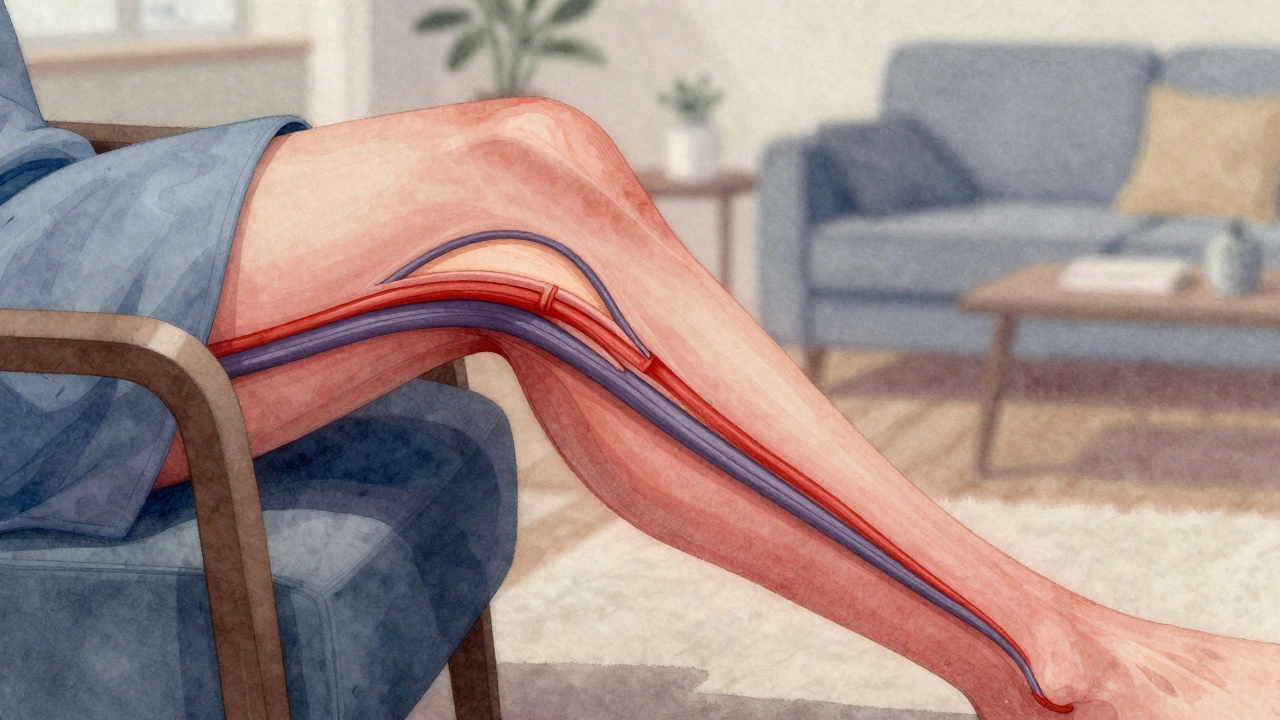
Recliners are designed for comfort, not biomechanics. When you lean back and lift your legs, the chair often pushes your knees into an unnatural angle. Most recliners don’t support the full length of your lower leg. Instead, they press the back of your calves against a hard edge. That edge cuts off circulation. It’s like wearing tight socks all day, but worse-it’s happening to your muscles and nerves.
Studies show that pressure on the popliteal fossa-the space behind your knee-can compress the tibial nerve and popliteal artery. This isn’t rare. A 2023 study in the Journal of Musculoskeletal Pain found that 68% of regular recliner users reported leg discomfort after sitting for more than 30 minutes. The problem isn’t your body. It’s the chair.
How your recliner changes your blood flow
When you sit upright in a chair, your legs hang naturally. Blood flows freely. But in a recliner, your knees are bent, your calves are pressed down, and your feet may dangle or rest on a footrest that’s too low. This position slows venous return-the process where blood flows back to your heart from your legs.
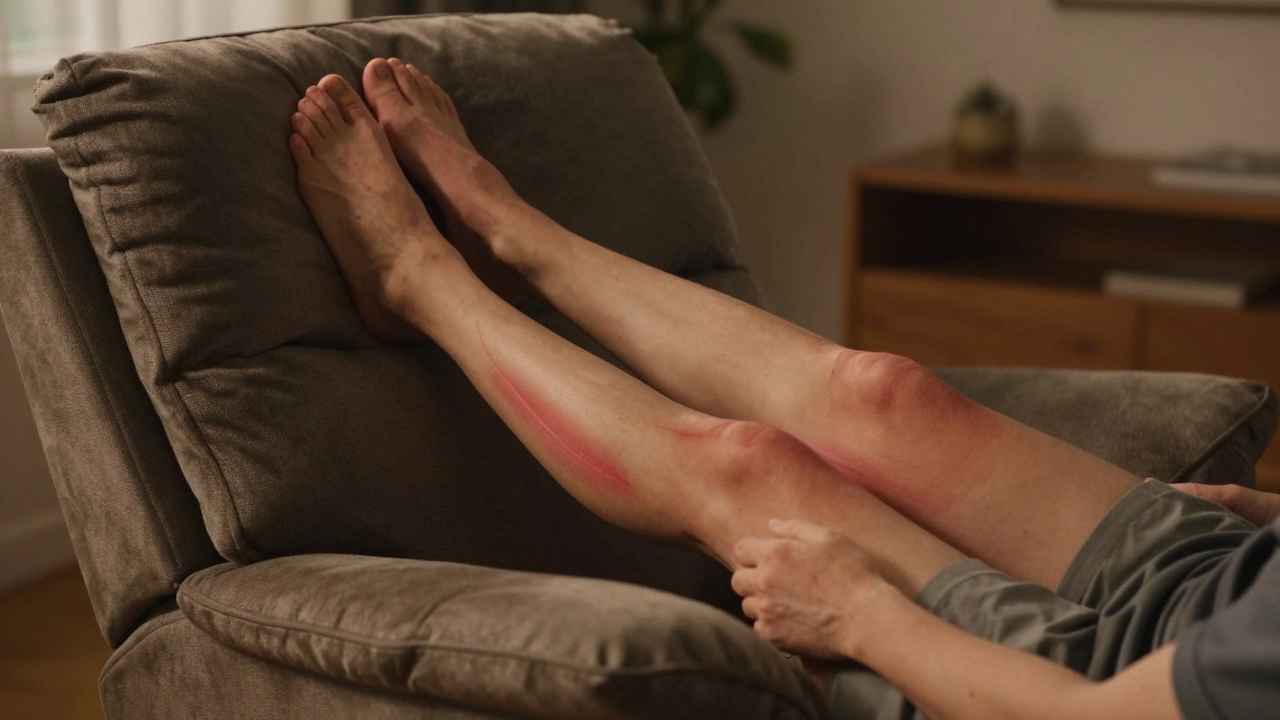
When blood pools in your calves, it triggers swelling, tingling, and aching. You might not notice it at first. But after an hour, your legs feel heavy. Your skin might feel tight. You might even see faint red marks where the chair edge dug in. That’s not a sign you’re getting too much relaxation-it’s a sign your circulation is being restricted.
People with existing circulation issues-like varicose veins or mild edema-are especially vulnerable. But even healthy people can feel this. Your body doesn’t care if you’re young or fit. If your blood can’t flow back up, your legs will let you know.
It’s not just blood-it’s nerves too
That burning or pins-and-needles feeling? That’s your sciatic nerve or peroneal nerve getting squished. Many recliners have a high, rigid backrest that forces your pelvis into a posterior tilt. Your lower back rounds. Your hips tuck under. That shifts your entire leg alignment. The peroneal nerve, which runs along the outside of your knee, gets compressed against the chair frame.
That’s why some people feel numbness in their feet or toes even when they haven’t crossed their legs. It’s not the sitting-it’s the angle. A 2022 biomechanics analysis from the University of Michigan found that recliners with a seat angle greater than 135 degrees significantly increased pressure on the lateral knee, leading to nerve irritation in 72% of test subjects.
Think of it like leaning your elbow on a table for hours. Your arm goes numb. Same thing happens to your legs in a poorly designed recliner.
Footrests that don’t support = trouble
Not all footrests are created equal. Some are too short. Some are too hard. Some don’t adjust. If your footrest ends before your heels, your calves are dangling. That means your gastrocnemius (the big calf muscle) is stretched, but not in a good way. It’s being held in a semi-tensed state, like a rubber band pulled too far and held there.
Or worse-your footrest is too high. Your knees are bent past 90 degrees. Your hamstrings are pulled tight. Your lower back is forced into a C-curve. Your hips are tilted backward. That’s a recipe for muscle fatigue. Your legs ache because they’re working overtime just to stay in position.
Look at your recliner’s footrest. Can your entire foot, from heel to toes, rest flat on it? If not, it’s not designed for your body. It’s designed for a generic “average” person-someone who probably doesn’t have your leg length, weight, or posture habits.
What you can do right now
You don’t need to throw out your recliner. But you do need to fix how you use it.
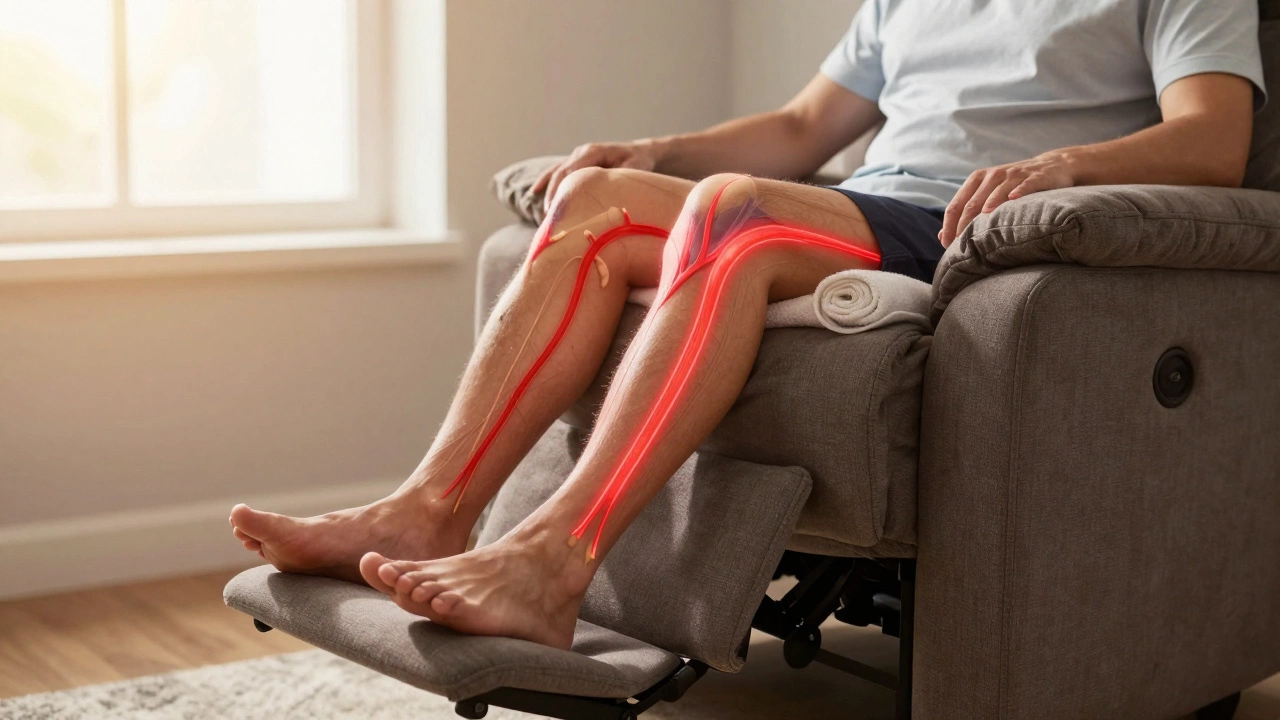
- Put a pillow behind your knees. This takes pressure off the back of your legs. A rolled towel or a small cushion works. It lifts your lower leg slightly, so the chair edge doesn’t dig into your popliteal area.
- Adjust your footrest so your feet are flat and fully supported. Your heels should touch the footrest. Your knees should be slightly lower than your hips-not higher. If your chair doesn’t let you do that, it’s the wrong chair for your body.
- Stand up and walk for 2 minutes every 30 minutes. Even if you’re watching TV. Get up. Stretch your calves. Roll your ankles. Walk to the kitchen. This isn’t about exercise-it’s about resetting your circulation.
- Try a wedge under your feet. If your footrest is too low, a 3-inch foam wedge under your heels can help align your legs properly. It’s cheap, easy, and works better than most expensive recliners.
When to upgrade your recliner
If you’ve tried all the fixes and your legs still ache, it’s time to look at a different chair. Not all recliners are built the same. Look for these features:
- Adjustable lumbar support-this keeps your pelvis in neutral position, which helps your legs stay aligned.
- Extended footrest-it should support your entire lower leg, not just your calves.
- Zero-gravity positioning-this elevates your legs slightly above your heart, reducing pressure and improving circulation. Many premium models offer this.
- Memory foam or gel padding on the calf area-this prevents the hard edge from pressing into your skin and nerves.
Brands like La-Z-Boy, Stressless, and HumanScale make models with these features. You don’t need to spend $3,000. But spending under $500 on a basic recliner means you’re paying for looks, not comfort. Your legs will thank you.
It’s not just the chair-it’s how long you sit
Even the best recliner won’t save you if you sit for five hours straight. Sitting still for long periods is bad for your legs, no matter where you’re sitting. Recliners just make it worse because they trick you into thinking you’re resting.
Doctors call this “sedentary syndrome.” It’s not a diagnosis-it’s a warning. Your muscles need movement. Your blood needs flow. Your nerves need space. If you’re using your recliner as a second bed, you’re asking for trouble.
Set a timer. Every 20 to 30 minutes, get up. Walk. Stretch. Do three calf raises. Sit back down. You’ll be amazed how much better your legs feel by the end of the day.
What you shouldn’t do
Don’t ignore the pain. Don’t assume it’s “just aging.” Don’t pop ibuprofen and keep sitting. Pain is your body’s alarm system. It’s telling you something’s wrong.
Don’t try to “tough it out.” Don’t think you’re being lazy because you feel discomfort. This isn’t about willpower. It’s about physics and biology.
Don’t blame your legs. Blame the chair. And fix it.
Why do my legs hurt only when I sit in my recliner and not in other chairs?
Recliners often have a fixed, rigid edge behind the knees that presses into the popliteal area, compressing nerves and blood vessels. Regular chairs usually don’t have this design. Even if you sit upright in a regular chair, your legs aren’t being pinched in the same way. The recliner’s unique shape is the culprit.
Can sitting in a recliner cause blood clots?
It’s unlikely for healthy people to develop a blood clot from occasional recliner use. But if you sit for hours every day with your legs compressed, especially if you’re over 50, overweight, or have a history of circulation problems, your risk increases. Prolonged pressure on the back of the knee can slow blood flow enough to raise the chance of deep vein thrombosis (DVT). Standing and moving regularly reduces this risk dramatically.
Is it normal for my feet to go numb in a recliner?
No, numbness isn’t normal. It means a nerve is being compressed-likely the peroneal nerve near your knee or the tibial nerve behind your calf. This happens when your leg is bent too sharply or pressed against a hard edge. It’s a warning sign. Adjust your position or get a better footrest. If numbness lasts more than a few minutes after standing, see a doctor.
Should I use a leg pillow with my recliner?
Yes-if your recliner doesn’t fully support your lower legs. A pillow or wedge behind your knees takes pressure off the back of your legs and improves circulation. It’s one of the cheapest and most effective fixes. You don’t need a fancy product-just a rolled towel or a small cushion.
Can changing my recliner fix this problem permanently?
It can, if you choose the right one. Look for a recliner with a fully adjustable footrest that supports your entire lower leg, cushioned edges behind the knees, and zero-gravity positioning. Pair that with regular movement, and your leg pain should disappear. But if you keep sitting for hours without moving, even the best chair won’t stop the ache.
Final thought: Comfort shouldn’t hurt
Your recliner is supposed to help you relax, not punish you. If your legs ache after sitting in it, something’s wrong-and it’s fixable. You don’t need to live with it. You don’t need to buy a new one right away. Start with a pillow, adjust your footrest, and move every half hour. If that doesn’t help, upgrade. Your legs aren’t the problem. Your chair is.