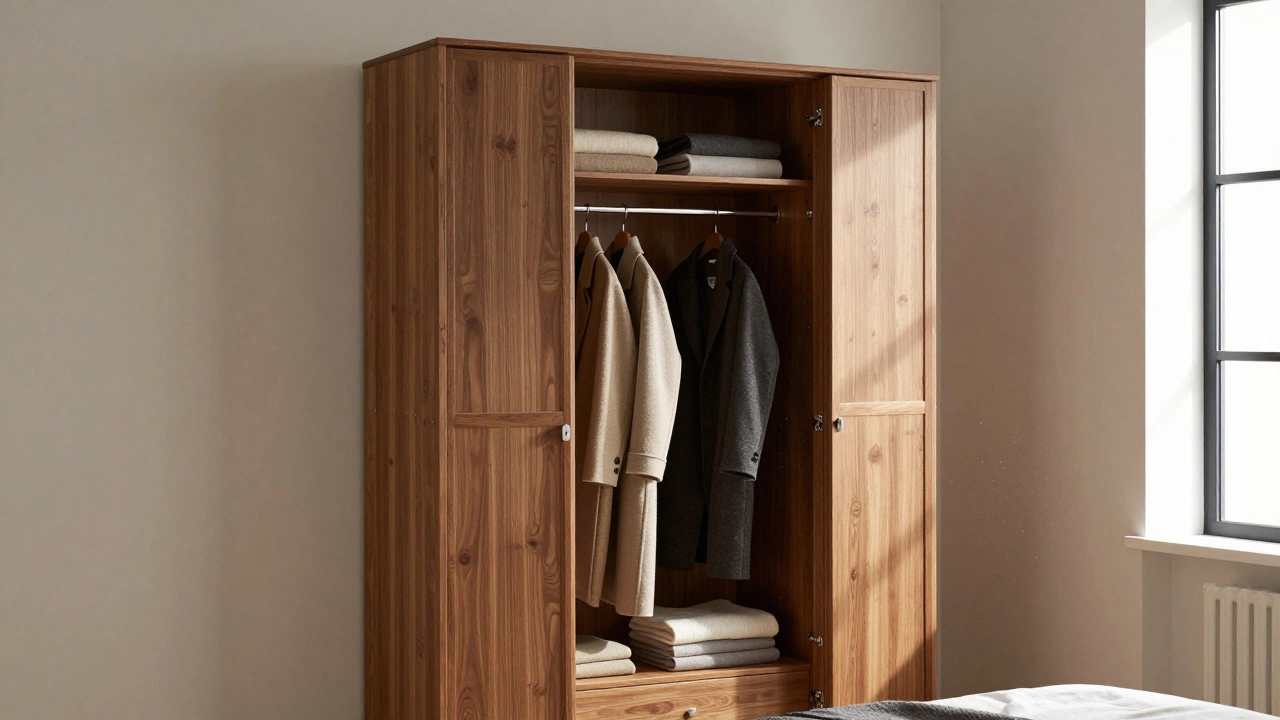
Ever walked into a room and seen a tall, freestanding piece of furniture filled with hanging space and shelves, and just known it was a wardrobe? You didn’t need a label. You didn’t need a manual. Something about its shape, its function, its presence just clicked. But what exactly makes a wardrobe a wardrobe? It’s not just a big closet. It’s not just a storage unit. There’s a reason we don’t call a dresser a wardrobe, or a bookshelf a wardrobe. And that difference matters-if you’re shopping, building, or just trying to understand how furniture works.
It Has to Hold Clothes, and Only Clothes
A wardrobe’s first job is simple: store clothing. Not shoes, not blankets, not books. Not even bags, unless they’re hanging. The core purpose of a wardrobe is to keep garments organized, protected, and easy to access. That’s why you’ll find hanging rods-usually one or two-running across the inside. That’s why there are shelves above or below for folded items like sweaters or jeans. That’s why some have drawers for underwear or accessories.
Compare that to a bookcase. It’s tall, it’s got shelves, it’s made of wood. But you wouldn’t hang a coat on it. You wouldn’t expect it to keep your shirts wrinkle-free. A bookcase stores flat or rigid objects. A wardrobe stores things that need to hang. That’s the line.
Even a walk-in closet isn’t always a wardrobe. A walk-in is part of the wall. A wardrobe is freestanding. It’s a separate piece you can move. That’s key.
It’s Freestanding and Self-Contained
One of the biggest mistakes people make is calling any storage space for clothes a wardrobe. But if it’s built into the wall, it’s a closet. If it’s a sliding door unit mounted on rails inside a niche, it’s a built-in system. A true wardrobe stands alone. It has four walls, a floor, and a ceiling-its own little box. You can roll it, lift it, or carry it to another room if you need to.
Think about IKEA’s PAX is a modular wardrobe system designed for customization and freestanding installation. Also known as PAX Wardrobe, it was launched in 2010 and has become one of the most popular wardrobe systems in North America.. Even though you assemble it yourself and fit it into a corner, it’s still designed to be freestanding. You can disconnect the panels and move it. That’s what makes it a wardrobe. A wall-mounted cabinet with doors? That’s a cabinet. Not a wardrobe.
It Includes Hanging Space as a Standard Feature
You can have a wardrobe without drawers. You can have one without mirrors. You can even have one without shelves. But you can’t have a wardrobe without hanging space. That’s non-negotiable. The hanging rod is the defining element. It’s what separates a wardrobe from a chest of drawers or a storage bench.
Most modern wardrobes have at least one adjustable rod. That lets you switch between long coats and shorter shirts. Some have two rods-one for long items, one for shorter ones. Others have pull-out hangers or rotating bars for better access. But no matter the design, the rod is there. It’s not optional. It’s the reason the thing exists.
Try this: take a dresser. Put a rod across the top. Now hang your clothes on it. Is it a wardrobe? No. Because the rod is an add-on. The structure wasn’t built for it. The internal layout doesn’t support it. A real wardrobe is designed from the ground up to support hanging clothes. The frame is reinforced. The back panel is thick enough to hold hooks. The height is calibrated for full-length garments.
It’s Designed for Visibility and Accessibility
Wardrobes aren’t hidden. They’re meant to be opened, looked into, and used daily. That’s why most have doors-either hinged, sliding, or folding. The doors aren’t just for looks. They protect clothes from dust, sunlight, and pets. But they also frame the experience. You open them. You see your clothes. You pick what you need. It’s a ritual.
Compare that to a storage trunk under the bed. You pull it out. You dig through. It’s functional, but not intuitive. A wardrobe is designed for quick selection. That’s why mirrors are common. Why interior lighting is becoming standard. Why some have pull-out tie racks or belt hooks. Every detail is about making it easier to find what you need, fast.
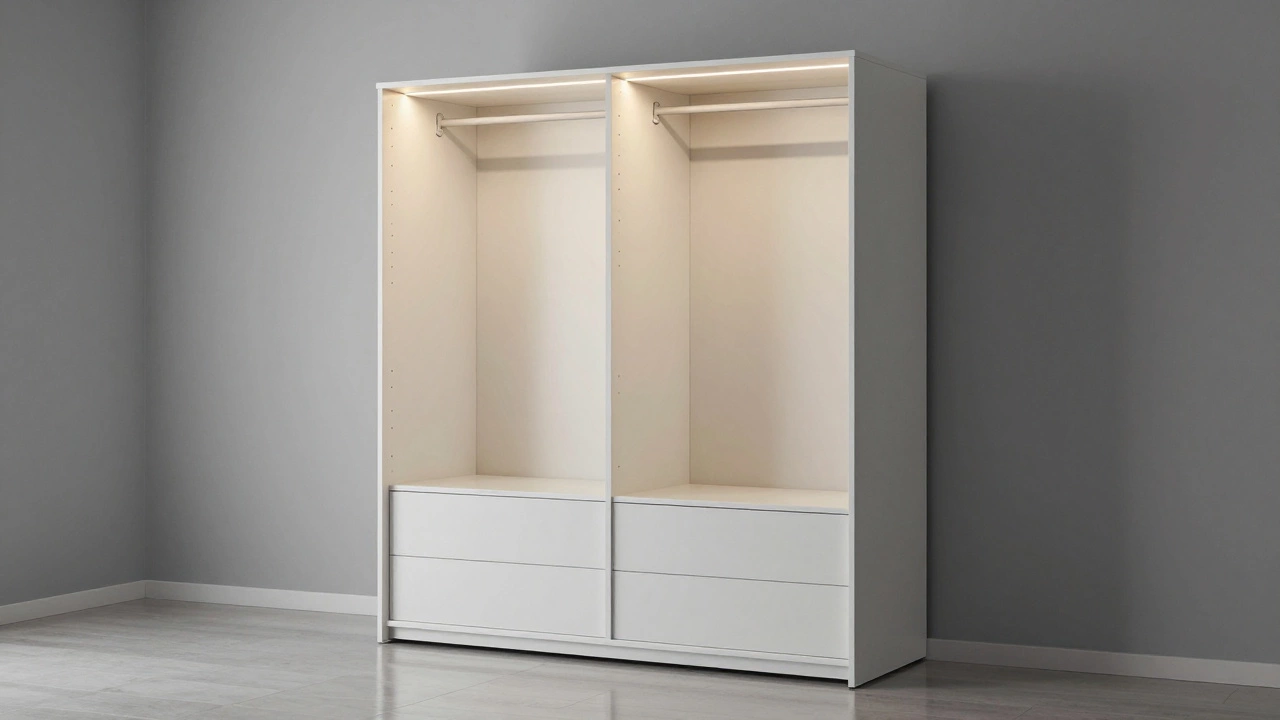
Modern wardrobes often include LED strips along the top or inside the doors. Some even have motion sensors. That’s not luxury-it’s evolution. The core idea hasn’t changed: clothes should be visible, reachable, and protected. If a piece of furniture doesn’t support that, it’s not a wardrobe.
It’s Built to Last and Fit a Human Scale
Wardrobes aren’t toys. They’re heavy. They’re solid. They’re built to hold hundreds of pounds of clothes, shoes, and accessories. That’s why they’re made from solid wood, engineered wood with thick veneers, or metal frames with reinforced joints. A cheap particleboard box with flimsy hinges? That’s a storage unit. Not a wardrobe.
Height matters too. Most wardrobes are between 6 and 7 feet tall. That’s because the average adult is about 5’8” to 5’10”. A garment that’s 48 inches long needs space to hang without touching the floor. A wardrobe that’s too short? Your pants drag. Too tall? You can’t reach the top. It’s not just about aesthetics-it’s about ergonomics.
Width and depth follow the same logic. A standard wardrobe is 24 to 30 inches deep. That’s enough room for a hanger to swing freely without hitting the back wall. Too narrow? Clothes get crushed. Too wide? You lose floor space. These aren’t arbitrary numbers. They’re the result of decades of human use.
It’s Not Just Storage-It’s Part of Your Daily Routine
A wardrobe isn’t just a box with doors. It’s tied to how you start and end your day. You open it in the morning. You close it before bed. You pick outfits, try things on, rearrange what’s inside. It’s personal. It reflects your style, your habits, your life.
That’s why people spend so much time choosing one. Not because they need to store clothes-they could use bins or drawers. But because the wardrobe is the one piece of furniture that holds their identity. It’s where they keep their professional suits, their weekend jeans, their wedding dress, their favorite sweater. It’s not just storage. It’s memory.
Look at vintage wardrobes. The ones with carved details, brass handles, or mirrored doors. They weren’t just functional. They were status symbols. Even today, a well-designed wardrobe can elevate a bedroom from ordinary to intentional. It’s the anchor of the space.
What Doesn’t Qualify as a Wardrobe
Let’s clear up the confusion.
- A closet is built into the wall. Not a wardrobe.
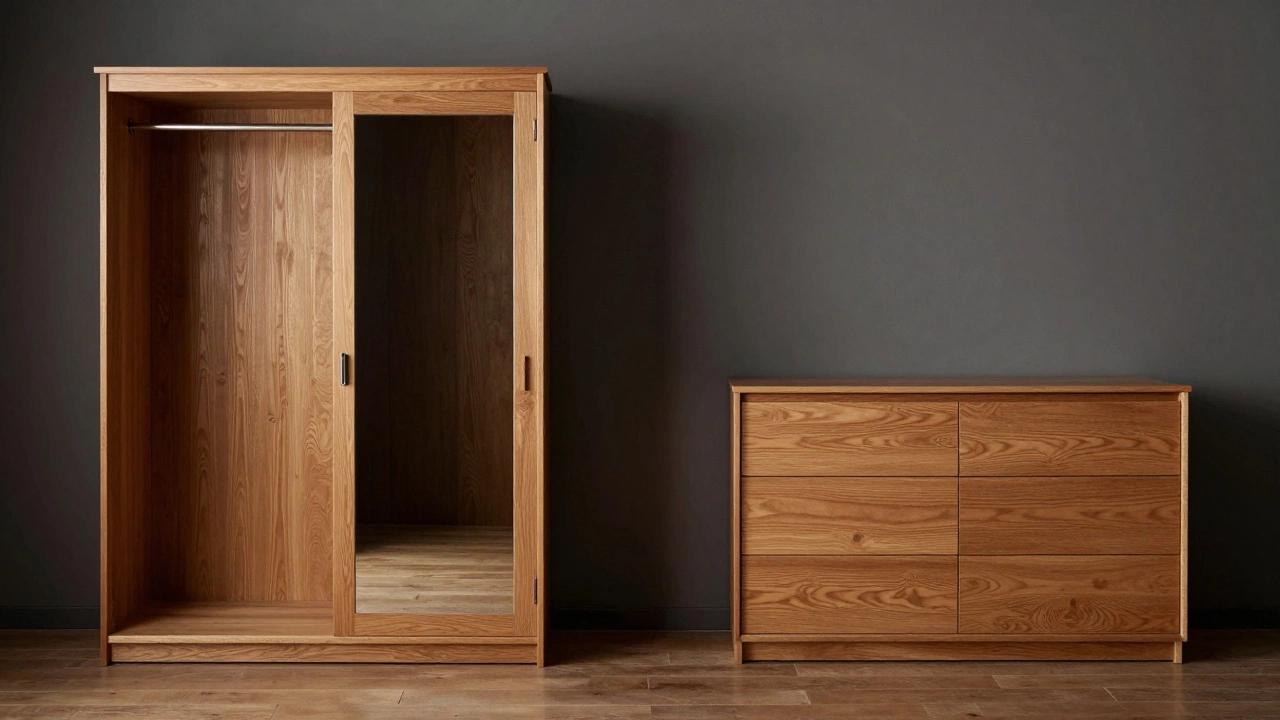
- A dresser has drawers. No hanging space. Not a wardrobe.
- A coat rack holds a few items. No enclosure. Not a wardrobe.
- A clothing storage cube is fabric. No structure. Not a wardrobe.
- A wardrobe trunk is a box with a lid. No hanging space. Not a wardrobe.
- A sliding door cabinet mounted on a wall? It’s a cabinet. Even if it holds clothes.
There’s one exception: modular systems like PAX is a modular wardrobe system designed for customization and freestanding installation. Also known as PAX Wardrobe, it was launched in 2010 and has become one of the most popular wardrobe systems in North America. or IKEA KUNGSBACKA is a sustainable wardrobe line made from recycled wood and materials, designed for modular use and freestanding placement. Also known as KUNGSBACKA Wardrobe, it was introduced in 2017 and is popular in eco-conscious homes.. Even though they’re assembled in place, they’re designed as standalone units. You can disassemble and move them. That’s why they count.
Why This Matters When You’re Buying
If you’re shopping for a wardrobe, knowing what makes one a wardrobe saves you time and money. You won’t waste cash on a “closet organizer” that’s just a shelf unit with doors. You won’t buy a tall dresser thinking it’ll work for hanging clothes-because it won’t.
Ask yourself: Does it have a hanging rod? Is it freestanding? Can I move it? Does it feel solid? If the answer to any of those is no, you’re not looking at a wardrobe. You’re looking at something else.
And if you’re designing a room? Don’t treat a wardrobe like an afterthought. It’s not just storage. It’s a key part of how you live. Choose one that fits your space, your habits, and your style. Because the right wardrobe doesn’t just hold your clothes. It makes your mornings easier, your room calmer, and your life a little more organized.
Is a closet the same as a wardrobe?
No. A closet is built into the wall and is part of the home’s structure. A wardrobe is a freestanding piece of furniture you can move. If you can pick it up and carry it to another room, it’s a wardrobe. If it’s fixed to the wall, it’s a closet.
Can a wardrobe have drawers?
Yes. Many wardrobes include drawers for folded clothes, accessories, or linens. But drawers alone don’t make a wardrobe. The hanging rod is the essential feature. A piece with only drawers is a dresser, not a wardrobe.
Do wardrobes need mirrors?
No. Mirrors are optional and added for convenience. Many modern wardrobes come with them, but older or minimalist designs often don’t. The presence of a mirror doesn’t define a wardrobe-hanging space and freestanding structure do.
What’s the minimum height for a wardrobe?
The minimum height should be at least 6 feet (183 cm) to accommodate most long garments like coats and dresses. Anything shorter will force you to fold or bunch clothes, which defeats the purpose of hanging them.
Can I turn a bookshelf into a wardrobe?
Technically, you could hang a rod across it, but it won’t function like a real wardrobe. Bookshelves aren’t built to support the weight of hanging clothes, lack proper depth, and aren’t enclosed for dust protection. It’s a workaround, not a solution.
Are all wardrobes made of wood?
No. While wood is common, modern wardrobes can be made from metal, laminate, MDF, or even high-density plastic. What matters is the structure-solid joints, reinforced hanging rods, and a freestanding frame-not the material.
What to Look for Next
If you’re thinking about upgrading your wardrobe, start by measuring your space. Check the ceiling height, door swing, and floor space. Then think about your clothes. Do you have a lot of long coats? Need extra drawers? Want lighting inside? Write down your needs before you shop.
Don’t be fooled by names. Some retailers call any tall storage unit a “wardrobe.” Read the specs. Look for hanging rods. Check the depth. See if it’s freestanding. If it checks those boxes, you’ve found a real wardrobe. If not, you’re just buying a fancy box.
The right wardrobe doesn’t just store your clothes. It makes getting dressed easier. It reduces clutter. It gives your room a sense of order. And once you’ve got one that fits your life, you’ll wonder how you ever lived without it.