Chair Recommendation Calculator
Find Your Perfect Chair Type
Answer these quick questions to determine if you need a task chair or office chair based on your daily sitting habits.
Ever sat in a chair at work and thought, why does this feel so wrong? You might be sitting in a task chair when you need an office chair-or vice versa. They sound the same, but they’re built for totally different jobs. Most people don’t realize it until their back starts aching after a few hours. Let’s clear up the confusion once and for all.
What Is a Task Chair?
A task chair is designed for short, focused work. Think of it as the Swiss Army knife of seating: lightweight, simple, and built to move. These chairs show up in conference rooms, home offices, or beside desks where you’re not sitting for eight straight hours. They’re common in places like libraries, co-working spaces, or even as extra seating in a living room.
Task chairs usually have:
- A lightweight frame-often plastic or aluminum
- Fixed or minimal height adjustment
- No lumbar support
- Basic armrests, if any
- Small, thin cushions
- Rolling casters for easy movement
They’re meant to be pushed under a desk when not in use. You grab one, sit down to type an email, answer a call, or review a document, then stand up and move on. They’re not made to hold you for long stretches. If you sit in one for more than two hours, you’ll start to feel it-your lower back gets tired, your hips shift, and your shoulders tense up.
What Is an Office Chair?
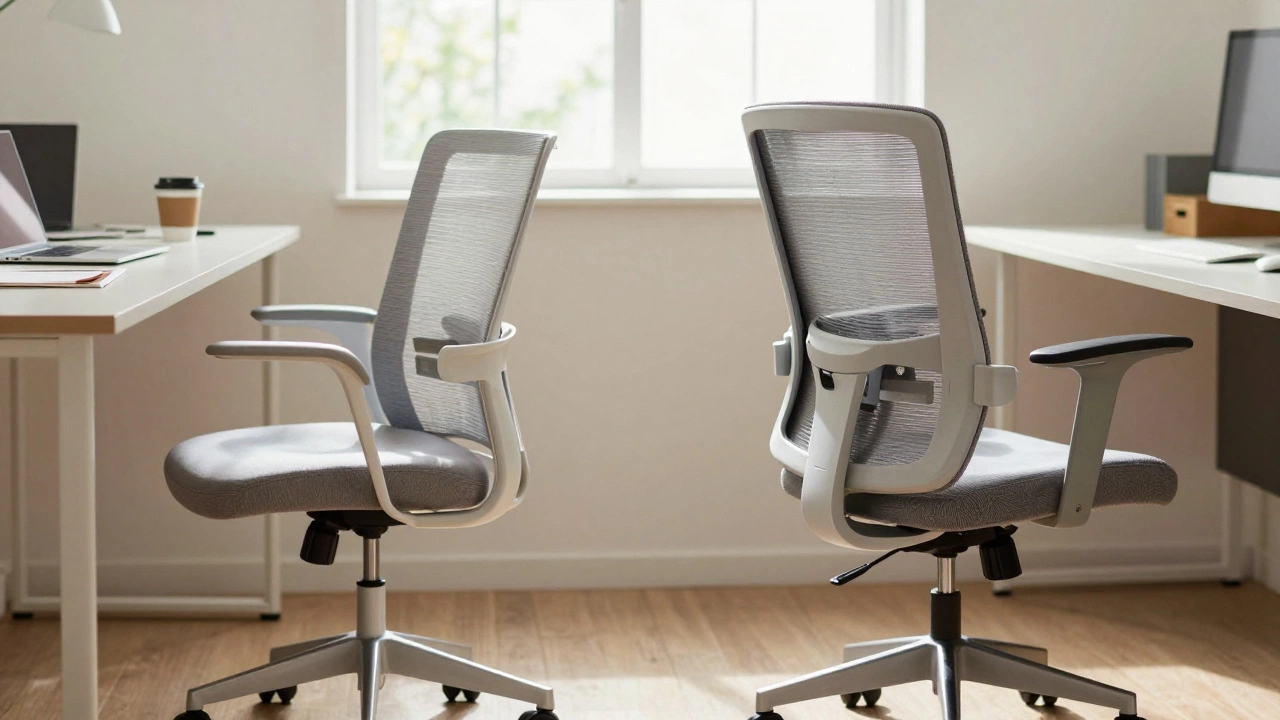
An office chair is built for endurance. If you’re at your desk from 9 a.m. to 6 p.m., five days a week, this is the chair you need. It’s engineered to support your body through long hours of typing, clicking, and thinking. These are the chairs you see in corporate offices, remote work setups, and design studios.
Office chairs come with:
- Adjustable height with gas lift
- Dynamic lumbar support that contours to your spine
- Padded seat with memory foam or high-density foam
- Adjustable armrests (height, width, even pivot)
- Reclining mechanism with tension control
- Breathable mesh or premium fabric upholstery
- 5-point base for stability
Brands like Herman Miller, Steelcase, and Humanscale make these. They cost more-often $300 to $1,000-but they last 10+ years. A good office chair doesn’t just sit you; it works with your body. It reduces pressure on your spine, keeps your hips aligned, and lets you shift positions without straining.
Key Differences at a Glance
| Feature | Task Chair | Office Chair |
|---|---|---|
| Primary Use | Short-term tasks | Long-term sitting (6+ hours/day) |
| Adjustability | Minimal or none | Full: height, armrests, lumbar, recline |
| Lumbar Support | None | Integrated, adjustable |
| Seat Padding | Thin foam or plastic | Thick, pressure-relieving foam or mesh |
| Weight Capacity | 200-250 lbs | 250-400 lbs |
| Price Range | $50-$150 | $300-$1,000+ |
| Lifespan | 2-5 years | 8-15 years |
| Best For | Guests, occasional use, small spaces | Daily, full-day remote or office work |
Why the Confusion Exists
Many retailers label every chair with a desk as an "office chair." That’s marketing, not accuracy. You’ll see a plastic chair with wheels and a tiny cushion on Amazon labeled "Ergonomic Office Chair"-but it’s really just a task chair with a fancy name.
Real ergonomic design isn’t about looks. It’s about how the chair responds to your body over time. A task chair might have a "contoured" seat, but if it doesn’t adjust to your leg length or support your lower back, it’s not ergonomic. True ergonomic chairs adapt to you, not the other way around.
Even some big brands blur the line. IKEA’s Markus chair, for example, is marketed as an "office chair," but it’s actually a hybrid. It has adjustable features, but the padding isn’t as supportive as a Herman Miller Aeron. It’s a good mid-tier option, but not a true premium office chair.
Who Should Use Which?
Here’s how to decide:
- Use a task chair if: You work 2-3 hours a day, need extra seating, or have a small space. Great for students, part-timers, or as a guest chair.
- Use an office chair if: You’re at your desk 6+ hours a day, you feel back pain after work, or you want to avoid future injury. This is non-negotiable for remote workers, programmers, writers, or anyone who types for hours.
Here’s a real example: A friend of mine bought a $90 task chair for her home office. She thought it was "good enough." After three months, she had chronic lower back pain. She switched to a Steelcase Leap-$750-and within two weeks, the pain vanished. She didn’t just buy a chair; she bought her ability to work without pain.
What Happens If You Use the Wrong One?
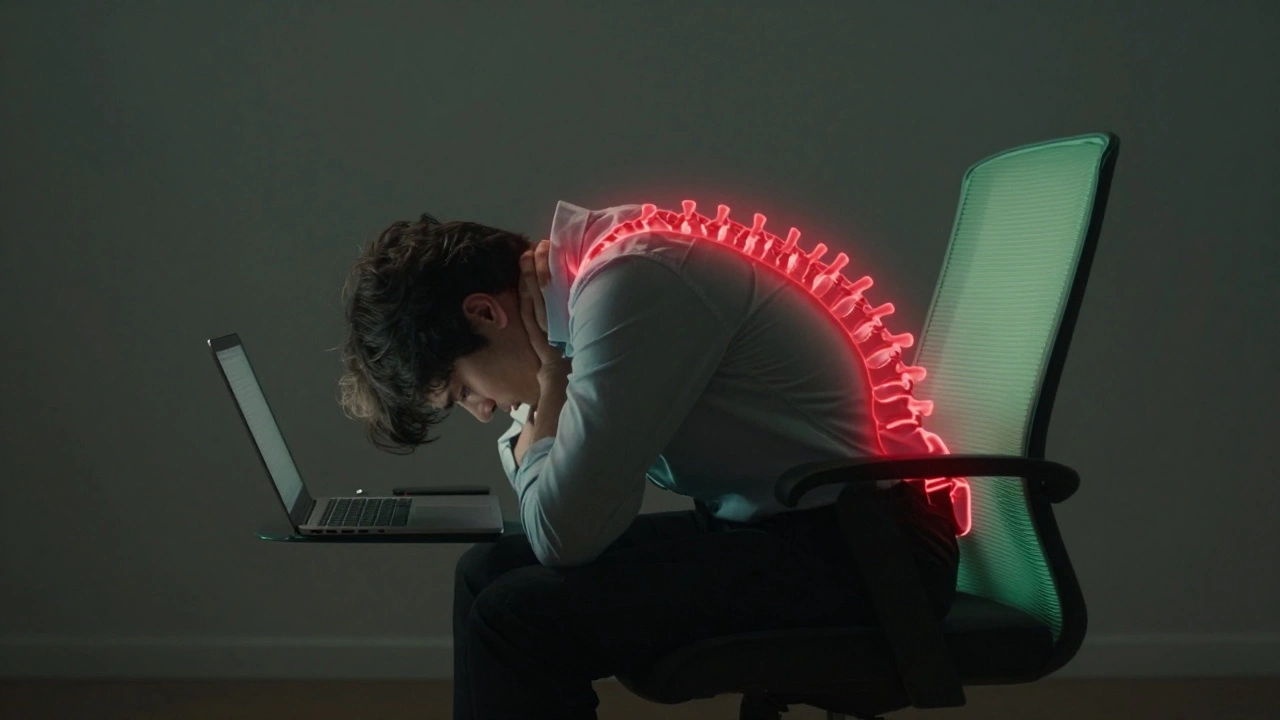
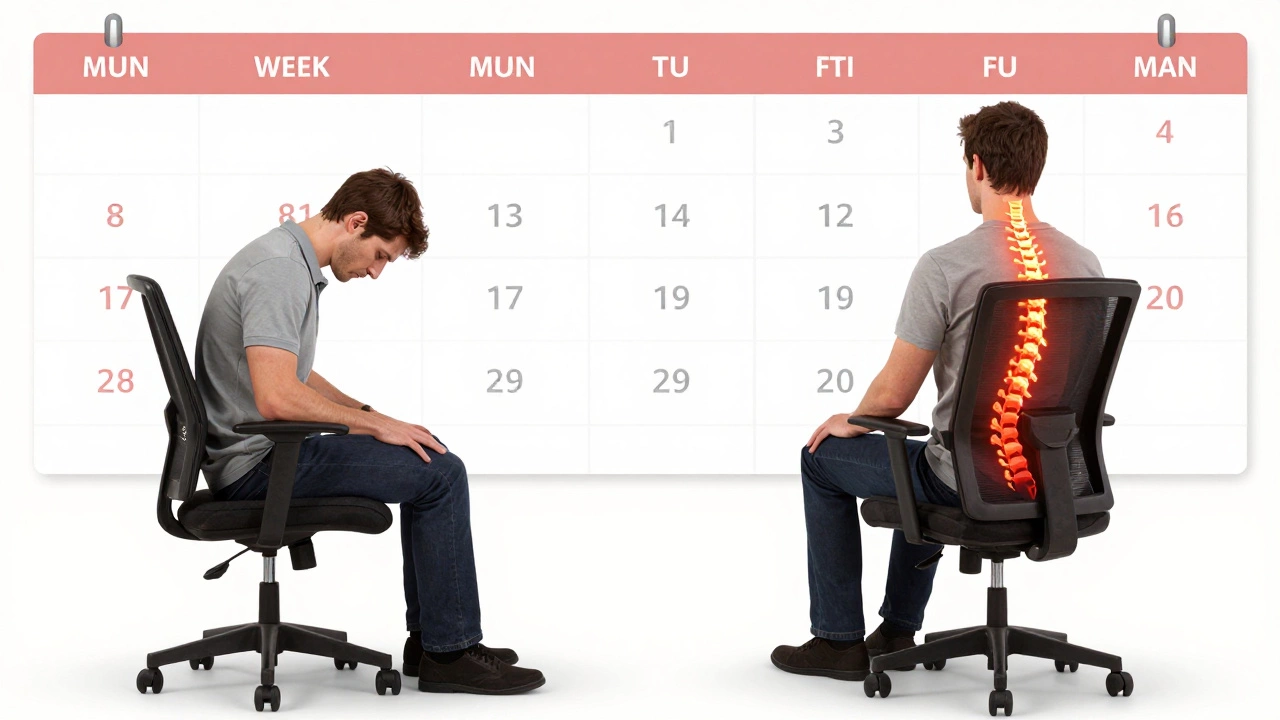
Sitting in a task chair all day isn’t just uncomfortable-it’s risky. Without proper lumbar support, your spine curves unnaturally. Your hips tilt backward, your shoulders hunch, and your neck strains forward. Over time, this leads to:
- Chronic lower back pain
- Sciatica
- Shoulder and neck tension
- Reduced circulation in the legs
- Decreased focus and productivity
Studies from the Occupational Safety and Health Administration (OSHA) show that improper seating is one of the top causes of workplace injuries in desk jobs. And it’s preventable.
On the flip side, using a heavy, overly padded office chair for occasional use is wasteful. It takes up space, costs too much, and is overkill if you’re only sitting for an hour. You don’t need a Ferrari to drive to the grocery store.
What to Look for When Buying
If you’re buying for daily use, here’s what matters:
- Check the lumbar support-it should curve naturally into your lower back, not press into it.
- Test the seat depth-there should be 1-2 inches between the edge of the seat and the back of your knees.
- Make sure the armrests let your shoulders relax when typing.
- Look for a breathable material like mesh if you tend to get hot.
- Try reclining-if you can’t lean back slightly, you’re missing out on natural movement.
Don’t buy online without testing. Sit in one for at least 15 minutes. Stand up. Does your back feel supported? Or does it feel like you’re sinking?
Bottom Line
A task chair is a temporary seat. An office chair is a long-term investment in your health. If you’re working full-time from a desk, spending $500 on a chair isn’t expensive-it’s cheap compared to physical therapy bills or lost workdays.
Don’t let marketing fool you. The difference isn’t in the name-it’s in the engineering. Choose based on how long you sit, not how it looks.
Can I use a task chair as my main office chair?
You can, but it’s not recommended. Task chairs lack the support needed for long hours. If you sit 6+ hours a day, you’ll likely develop back pain, poor posture, or muscle strain over time. It’s a short-term fix that becomes a long-term problem.
Are all office chairs ergonomic?
No. "Ergonomic" is a marketing term used loosely. True ergonomic chairs have adjustable lumbar support, seat depth, armrests, and recline tension. If a chair doesn’t list these features, it’s probably not ergonomic-even if the label says so.
What’s the cheapest good office chair?
The Autonomous ErgoChair Pro ($349) and the Herman Miller A2 ($599) are often recommended as affordable, high-quality options. Avoid chairs under $200 if you sit all day-they rarely have real support. A $150 chair might look nice, but it won’t last or protect your spine.
Do I need armrests on my office chair?
Yes-if you type or use a mouse for long periods. Armrests reduce shoulder strain by letting your arms rest at a 90-degree angle. Adjustable armrests are ideal because they let you match your desk height. Fixed armrests can cause more harm than good if they’re too high or too low.
How do I know if my chair is the right height?
Your feet should rest flat on the floor, your knees should be at a 90-degree angle, and your elbows should be level with your desk when typing. If your chair doesn’t adjust height, you’re probably sitting too high or too low-both cause strain.
Next Steps
If you’re still unsure, ask yourself: How many hours a day do I actually sit at my desk? If it’s less than three, a task chair is fine. If it’s more than five, skip the cheap option. Invest in a chair that moves with you, not against you. Your back will thank you next year-and the year after that.