Silica Gel Calculator
Determine how many moisture-absorbing packs you need to protect your couch during storage
Recommended Silica Gel Packs
Based on your storage conditions and couch size
Important: Always use breathable canvas covers (not plastic) and check every 2-3 months. Place packs between cushions and near arms.
Storing a couch shouldn’t be a gamble. If you just wrap it in plastic and toss it into a garage or unit, you’re asking for mold, dust buildup, and permanent damage. Sealing a couch for storage isn’t about covering it up-it’s about creating a breathable, protective barrier that keeps moisture, pests, and dirt out while letting air circulate. Done right, your couch can sit untouched for months-or even years-and come out looking like it never left your living room.
Why sealing matters more than you think
People think storage means just moving furniture out of the way. But a couch is full of vulnerable materials: fabric absorbs moisture, foam breaks down under pressure, and wood frames swell when humidity creeps in. A 2023 study by the International Furniture Industry Association found that 68% of stored sofas showed signs of mildew or fabric discoloration after six months-not because they were exposed to rain, but because of trapped humidity inside cheap plastic wraps.
Sealing isn’t about making it airtight. It’s about controlling the environment around the couch. You need to block dust, prevent condensation, and stop bugs from nesting in the cushions. That means using the right materials, not just whatever plastic wrap you have lying around.
What you need before you start
Don’t rush this. Gather everything before you touch the couch:
- Heavy-duty cotton canvas storage cover (not plastic or vinyl)
- Microfiber cloths for cleaning
- White vinegar and water solution (1:1 ratio) for stain removal
- Moisture-absorbing silica gel packs (at least 6-8 per couch)
- Upholstery brush or soft vacuum attachment
- Painter’s tape (for securing covers without damaging fabric)
- Cardboard sheets or foam padding (to protect legs and corners)
Don’t use trash bags, shrink wrap, or cheap plastic tarps. These trap moisture like a sauna. Even if the storage unit feels dry, humidity shifts at night. Canvas breathes. Plastic suffocates.
Step-by-step: How to seal your couch properly
- Deep clean first. Vacuum every inch of the couch, including under the cushions and along the seams. Use the upholstery brush to lift embedded dust. Wipe down wood or metal legs with a damp microfiber cloth and vinegar solution. Let it dry completely-this is non-negotiable. Any leftover moisture becomes mold fuel.
- Remove and store cushions separately. Take off all removable cushions. Clean them the same way. Place each cushion in its own breathable cotton bag or wrap it loosely in a clean cotton sheet. Don’t compress them. Foam loses its shape if squeezed for too long.
- Protect the legs and corners. Wrap each leg with cardboard or foam padding. Secure with painter’s tape. This prevents scratches and keeps the couch from sinking into carpet or concrete if stored on the floor.
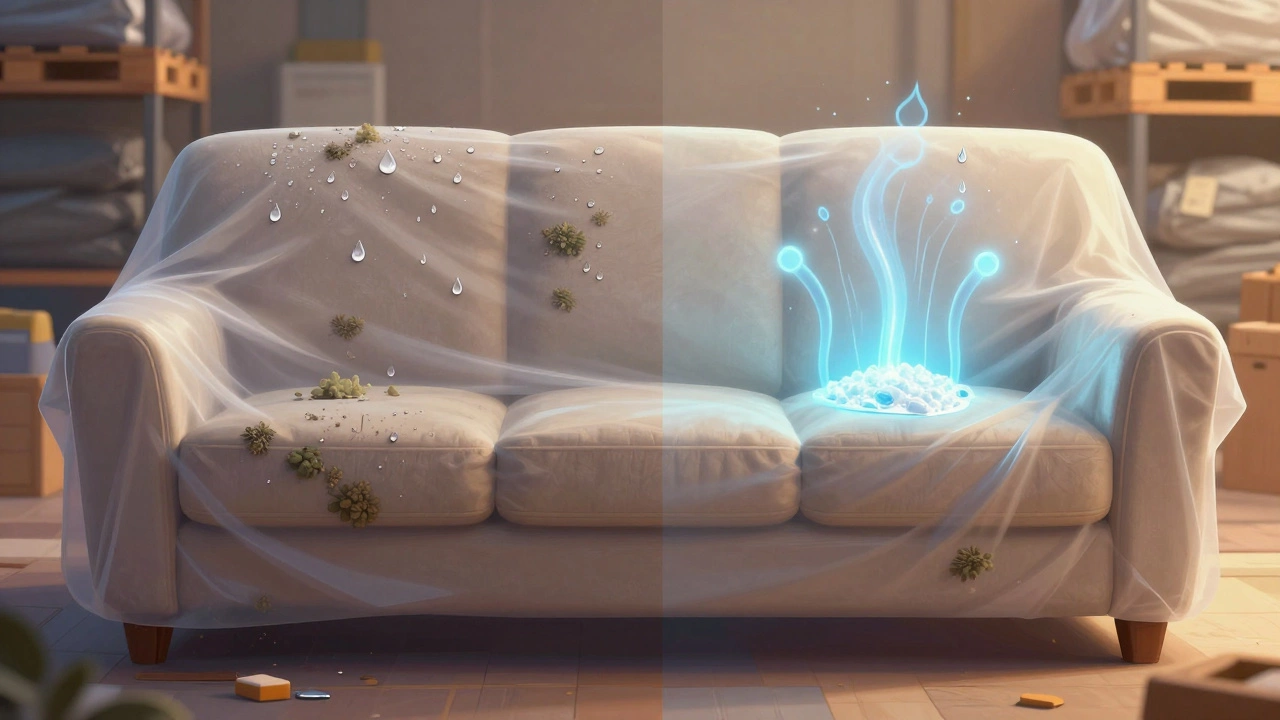
- Place silica gel packs inside. Tuck 2-3 silica gel packs between the back and seat cushions before reassembling. Put another 2-3 near the arms and base. These absorb ambient moisture without touching the fabric.
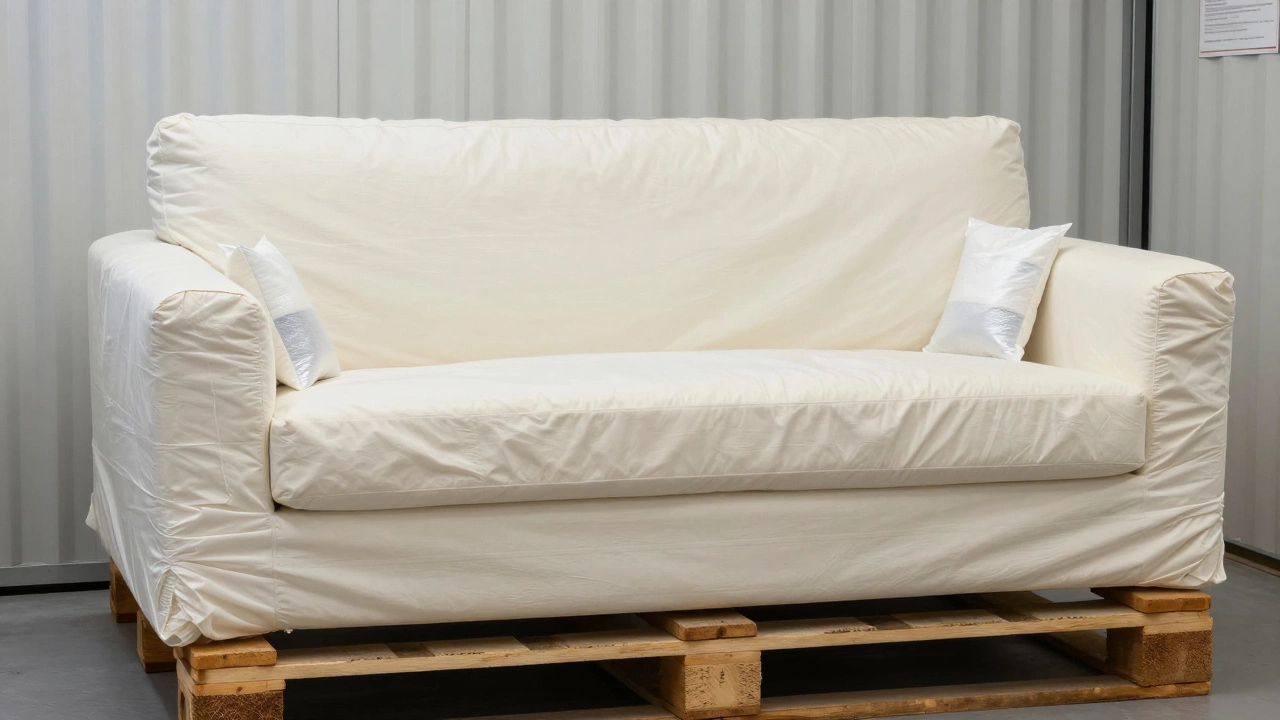
- Wrap the couch in a canvas cover. Drape the heavy-duty storage cover over the entire couch like a tent. Make sure it’s large enough to hang down and touch the floor slightly. This creates a seal against rising damp from concrete floors. Don’t zip or tie it tightly-leave room for air to move.
- Seal the bottom edge. Use painter’s tape to gently secure the bottom edge of the cover to the floor or base of the couch. This keeps dust and pests out without trapping air inside.
That’s it. No plastic. No tight seals. Just breathable protection with moisture control built in.
Where to store it makes all the difference
Even the best seal won’t save your couch if you store it in the wrong place.
- Avoid basements. Concrete floors pull moisture from the ground. Even if it feels dry, humidity levels stay high.
- Avoid attics. Summer heat and winter cold cause extreme temperature swings. Fabric becomes brittle. Foam cracks.
- Choose a climate-controlled unit. Ideal storage: 55-70°F, 30-50% humidity. Many self-storage facilities offer this. It’s worth the extra $20-$40 a month.
- Elevate the couch. Place it on wooden pallets or risers. Never let it sit directly on concrete or dirt. Air needs to flow underneath.
If you’re storing it in your garage, put it on cinder blocks and line the floor with a vapor barrier. Then cover it with the canvas wrap. It’s not perfect-but it’s better than nothing.
What not to do
Here are the most common mistakes people make-and why they ruin couches:
- Using plastic wrap → Traps sweat and condensation. Results: mildew, musty smell, stained fabric.
- Stacking things on top → Compresses foam and springs. Your couch will never sit right again.
- Leaving cushions inside the cover → If they’re damp or dirty, they’ll rot the fabric from the inside.
- Forgetting to check it → Check every 2-3 months. Look for damp spots, bugs, or odors. Swap out silica gel packs if they’ve turned soggy.
How long can you safely store a sealed couch?
With proper sealing and climate control, a couch can be stored for up to two years without damage. Beyond that, even the best materials start to degrade. Foam loses elasticity. Fabric fibers weaken. Leather dries out.
If you’re storing it for more than a year, take it out every 6 months, air it out for 24 hours, and rotate the cushions. This keeps the foam from developing permanent indentations.
What to do when you bring it back out
Don’t just unwrap it and plop it in your living room. Follow these steps:
- Unwrap it in a clean, dry room.
- Let it air out for at least 4-6 hours-preferably overnight.
- Vacuum the entire surface again. Dust settles even in sealed covers.
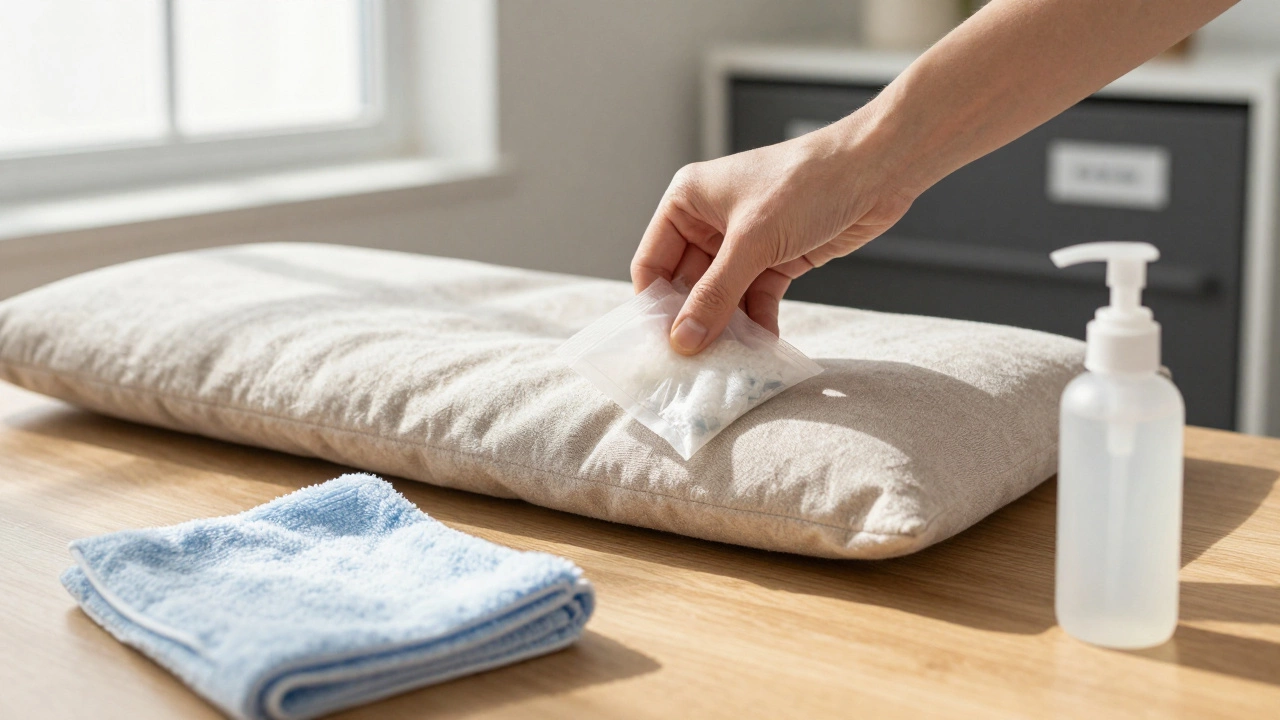
- Check for stains or odors. If you smell anything musty, mix baking soda with a little water, dab it lightly on the fabric, let sit for 15 minutes, then vacuum.
- Fluff and rotate cushions. Give them time to regain their shape.
If the fabric feels stiff or smells sour, you might need a professional upholstery cleaner. Don’t try to steam-clean it yourself-heat can shrink or warp the material.
When to replace instead of store
Not every couch is worth saving. If your couch is already worn out-tearing seams, sagging cushions, broken springs-don’t waste money on storage. The cost of cleaning and repairing it often exceeds the price of a new one.
Ask yourself: Is the fabric still intact? Do the cushions bounce back? Is the frame solid? If two or more of these are failing, it’s time to let it go. Storage isn’t a fix for poor quality.
Can I use a plastic tarp to seal my couch for storage?
No. Plastic tarps trap moisture and create a humid environment inside, which leads to mold, mildew, and fabric rot. Always use a breathable cotton canvas cover instead. It lets air circulate while blocking dust and pests.
How often should I check on my stored couch?
Check every 2-3 months. Look for damp spots, strange smells, or signs of insects. If the silica gel packs have turned dark or feel wet, replace them immediately. This simple step prevents most storage disasters.
Should I remove the cushions before storing?
Yes. Cushions are the most vulnerable part. Store them separately in breathable cotton bags. This prevents them from getting compressed, allows airflow, and makes it easier to clean them before storage.
Is climate control necessary for storing a couch?
Highly recommended. Temperature swings and high humidity cause fabric to fade, foam to crack, and wood to warp. A climate-controlled unit keeps conditions stable-ideally between 55°F and 70°F with 30-50% humidity. It’s the single biggest factor in preserving your couch.
Can I store a leather couch the same way?
Almost-but leather needs extra care. Clean it with a leather-specific cleaner, then apply a light coat of leather conditioner before storage. Never wrap it in plastic. Use a cotton cover and add silica gel packs. Leather dries out faster than fabric, so check it monthly.
Final tip: Think ahead
Storing a couch isn’t a one-time task. It’s part of managing your home over time. If you’re moving, downsizing, or renovating, plan your storage like you’d plan a trip-pack smart, protect what matters, and check in along the way. A sealed couch isn’t just furniture-it’s an investment. Treat it like one.