TV Stand Wall Mount Safety Calculator
Calculate if your TV stand can safely support wall mounting. Based on physics of torque forces and structural integrity.
Most people assume if a TV stand is sturdy enough to hold a TV, it can also be mounted on the wall. That’s not true. And trying to mount a standard TV stand on the wall can lead to cracked drywall, broken brackets, or worse-a falling TV. You can’t just bolt any TV stand to the wall. The design, materials, and weight distribution of the stand matter more than you think.
Why Most TV Stands Can’t Be Wall Mounted
TV stands are built to sit on the floor. They’re designed with a wide base to prevent tipping, not to anchor into wall studs. Even the heaviest wooden or metal TV stands aren’t engineered for vertical loads. Their legs, brackets, or frames aren’t reinforced to handle the stress of being pulled sideways by gravity when mounted. A TV that weighs 50 pounds on a stand becomes a 75-pound torque force when mounted on the wall-especially if it’s a larger screen.Take a typical mid-range TV stand made of engineered wood. It might hold up fine on the floor, but the particleboard or MDF used in its construction can’t handle the concentrated pressure of wall anchors. The screws will pull through the material within months, especially if the TV is moved or bumped. Metal stands with thin tubing? They’ll bend under the strain. Even solid oak stands, while strong, usually lack the internal mounting points needed for safe wall installation.
What Makes a TV Stand Wall-Mountable?
There are a few exceptions. Some TV stands are specifically designed to be mounted. These are called wall-mountable TV stands or mounting-ready TV consoles. They’re rare, but they exist. Look for these features:- Integrated VESA mounting plate on the back
- Thick, reinforced steel or aluminum frame
- Pre-drilled holes matching standard VESA patterns (75x75, 100x100, 200x200, etc.)
- Manufacturer’s explicit warning that it’s designed for wall mounting
Brands like Flexson, Sanus, and some high-end models from Samsung or LG offer these. They’re usually priced above $300 and marketed as “wall-mountable entertainment centers.” You won’t find them at big-box stores like Walmart or Target. You’ll need to search specialty retailers or manufacturer sites.
What Happens If You Try to Mount a Regular TV Stand?
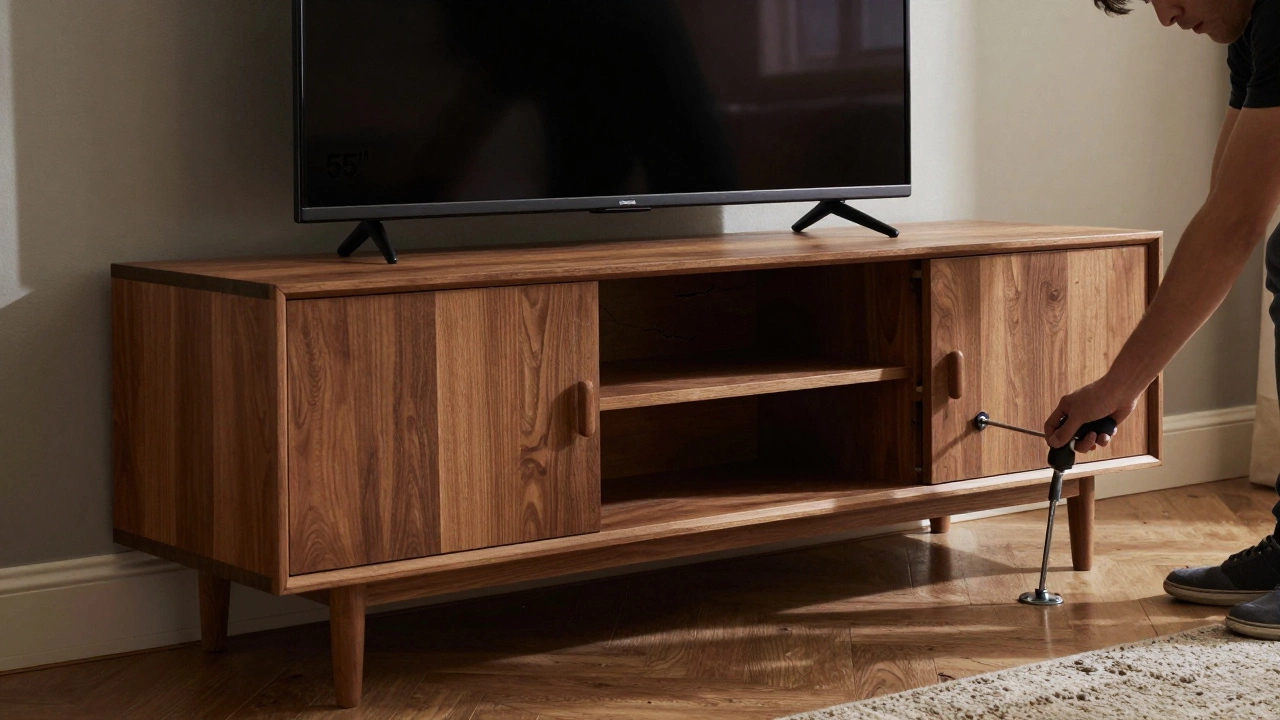
People have tried. They drill into the bottom of a wooden stand, screw in toggle bolts, and hope for the best. The results are predictable:- The wood splits around the screw holes within weeks
- The stand tilts forward, pulling the TV out of alignment
- The wall anchors pull out, leaving gaping holes
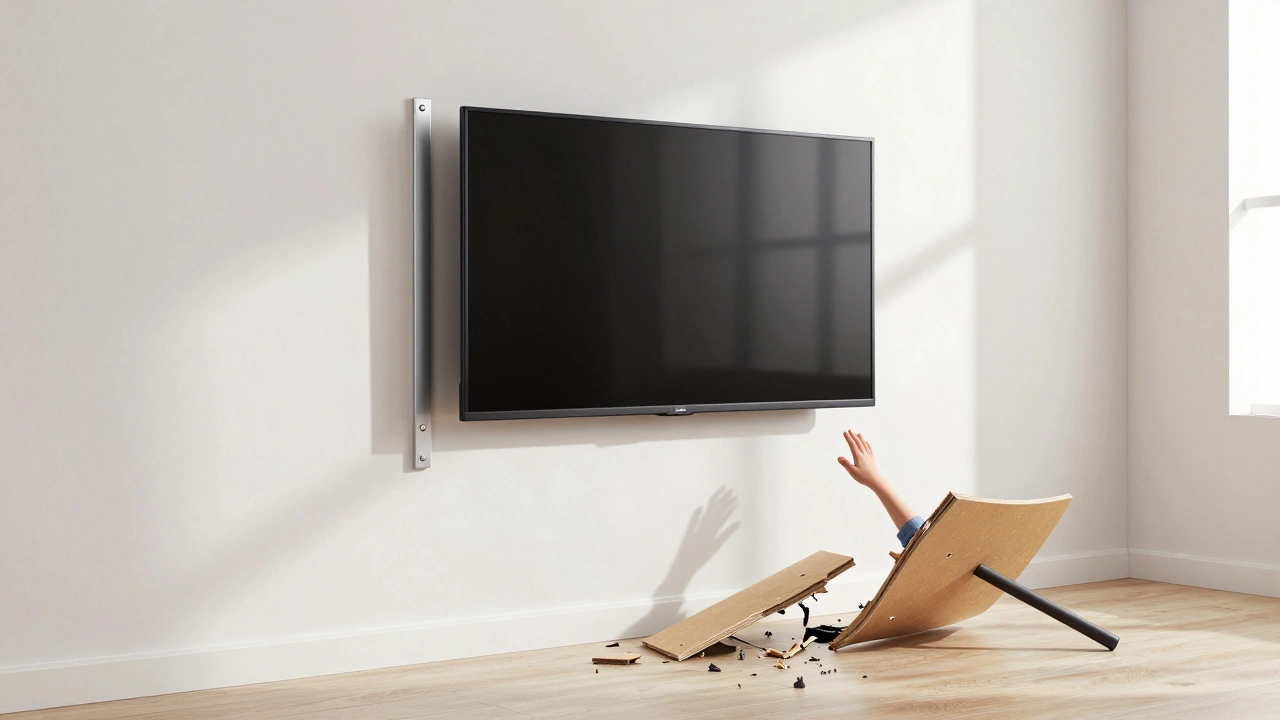
- The TV falls-sometimes during a movie, sometimes while cleaning
In 2023, Consumer Reports tracked 142 cases of TV falls from improperly mounted furniture. Over 60% involved people trying to mount standard TV stands. Two people suffered minor head injuries. One child broke a wrist catching a falling 55-inch TV. These aren’t rare accidents. They’re preventable mistakes.
What Should You Do Instead?
If you want your TV on the wall, skip the stand entirely. Buy a TV wall mount designed for your TV’s size and weight. These mounts are tested to hold up to 150 pounds, with steel brackets, safety locks, and stud anchors built to last. They’re cheap-starting at $35-and easy to install with a drill and level.Here’s how to pick the right one:
- Check your TV’s VESA pattern (usually in the manual or on the back)
- Confirm your TV’s weight (most 55-inch TVs weigh 30-50 lbs)
- Choose a mount rated for at least 20% more than your TV’s weight
- Make sure it fits your wall type (drywall, plaster, concrete)
- Use wall studs-never just drywall anchors
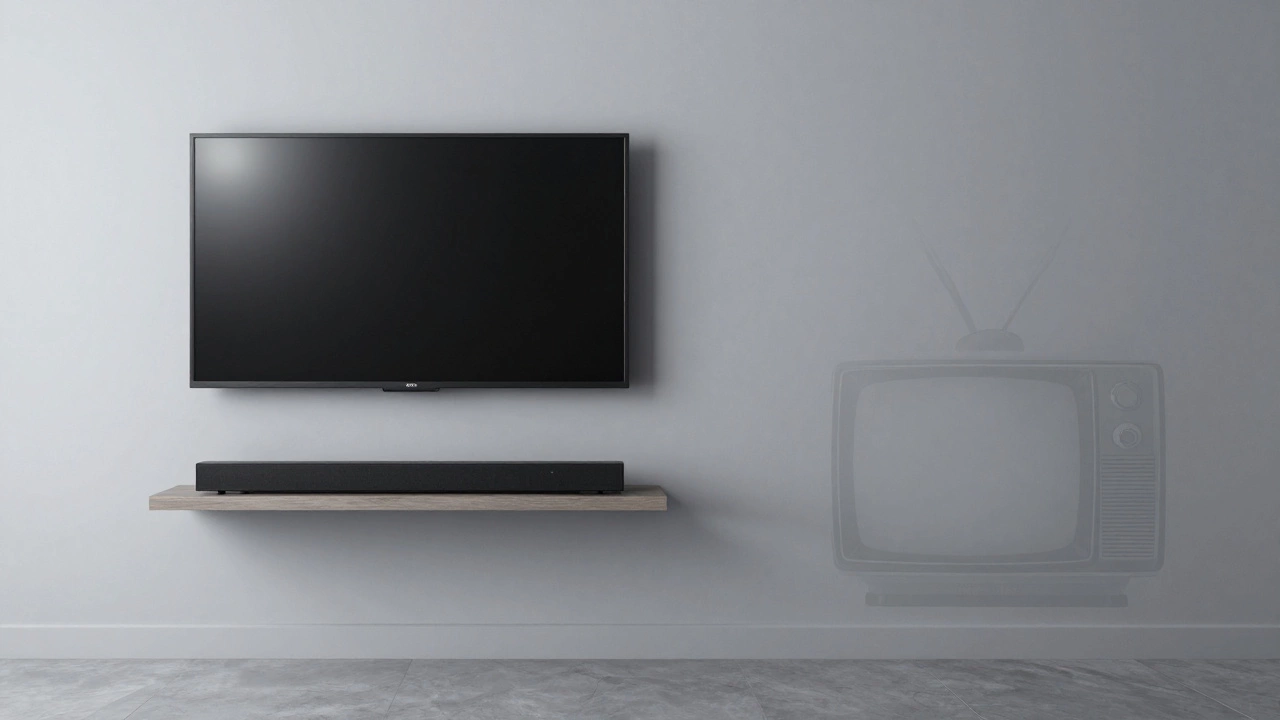
Once mounted, you can still use a small shelf or media tray below the TV for your soundbar, streaming box, or game console. That’s the real goal: keeping everything neat and safe. You don’t need a stand to do it.
Can You Modify a TV Stand to Make It Wall-Mountable?
Technically, yes-but you shouldn’t. Adding steel plates, welding brackets, or reinforcing the frame sounds like a smart DIY fix. But here’s the problem: you’re not a structural engineer. Even if you get it to hold for a year, vibrations from the TV’s speakers, accidental bumps, or temperature changes can cause hidden metal fatigue. One day, the stand gives way. Insurance won’t cover it. You’ll be out the cost of the TV, the wall repair, and possibly medical bills.There’s no safe, reliable way to retrofit a floor-standing TV stand for wall mounting. The risk isn’t worth the $50 you’d save.
What About TV Stands With Built-In Wall Mounts?
Some newer models-mostly from European or high-end U.S. brands-come with a detachable wall-mounting kit. These are the only exceptions that work. For example, the Flexson WallMount Console includes a steel bracket that bolts directly to the wall and slides into the stand’s frame. The stand itself isn’t mounted-it’s just a cabinet that hangs from a hidden steel frame. It looks like a stand, but it’s really a wall-mounted cabinet with a removable bottom shelf.These are not common. You’ll need to read the product description carefully. Look for phrases like “wall-mountable design,” “requires permanent wall installation,” or “mounting hardware included.” If it says “freestanding only,” walk away.
Final Answer: No, You Can’t Wall Mount Any TV Stand
Unless it’s explicitly designed for it, don’t try. A TV stand is not a TV mount. They serve different purposes. One holds your TV on the floor. The other holds your TV on the wall. Mixing them up is dangerous and unnecessary.If you want a clean, modern look with your TV on the wall, buy a proper wall mount. They’re affordable, safe, and designed by engineers who understand physics-not furniture designers who care about aesthetics over safety. Save your TV, your wall, and your peace of mind.
Can I mount a TV stand to the wall if I use heavy-duty anchors?
No. Heavy-duty drywall anchors can hold a few pounds, but not the torque and leverage of a TV on a stand. TV stands aren’t built to transfer weight to wall anchors-they’re built to rest on the floor. Even toggle bolts will eventually pull through the stand’s material, causing the TV to fall. Always use a proper wall mount instead.
Are there any TV stands that are safe to wall mount?
Yes, but they’re rare. Look for models labeled “wall-mountable” or “mounting-ready” by the manufacturer. These have built-in VESA plates, reinforced steel frames, and pre-drilled holes. Brands like Flexson and Sanus make them. If the product page doesn’t clearly say it’s designed for wall mounting, assume it’s not safe.
What’s the difference between a TV stand and a TV wall mount?
A TV stand is a piece of furniture meant to sit on the floor and support a TV with its own base. A TV wall mount is a metal bracket engineered to attach directly to wall studs and hold the TV securely from behind. Wall mounts are tested for safety under stress, while stands are not. They’re not interchangeable.
Can I use a TV stand under a wall-mounted TV for storage?
Yes, but only if it’s not attached to the wall. You can place a freestanding TV stand or media console on the floor under a wall-mounted TV. Just make sure it’s stable and doesn’t block vents or cables. Many people do this for extra storage without risking safety.
Why do some TV stands look like they’re meant to be mounted?
Designers sometimes make stands with slim profiles or floating looks to mimic wall-mounted TVs. But that’s just styling. The base is still meant for the floor. Don’t be fooled by appearance. Always check the manufacturer’s specs-not the look.