Chigger Risk Calculator
How at risk is your patio for chiggers?
Answer a few quick questions to determine your chigger risk level and get personalized prevention recommendations.
Chigger Risk Level
You’ve just settled into your favorite patio chair after a long day, coffee in hand, sun on your skin-and then it happens. A sudden, relentless itch on your ankles. You look down. Nothing there. But you know. It’s chiggers. These tiny red mites don’t bite like mosquitoes, but they latch onto skin, inject saliva that breaks down tissue, and leave behind angry, blister-like welts. And if you’ve got patio furniture in your yard, you’re already in their hunting zone.
Why chiggers love your patio furniture
Chiggers aren’t bugs. They’re the larval stage of harvest mites, barely visible to the naked eye-smaller than a period at the end of this sentence. They live in tall grass, brush, leaf piles, and damp soil. Your patio furniture isn’t the target; it’s the staging ground. When you sit down, you disturb the ground beneath or around your chairs, and the chiggers climb up-onto fabric, wood, metal, or cushions. They don’t burrow into your skin. They crawl onto your clothes, find a thin spot-like around socks or waistbands-and then pierce the skin with their mouthparts. That’s when the itching starts, usually 12 to 24 hours later.
Here’s the kicker: chiggers don’t live on your furniture. They don’t nest in cushions. They don’t breed in wood. But they’re constantly moving from the ground up, especially during spring and early summer. In Mississauga, where damp lawns meet paved patios, chigger activity peaks from late April through June. If your furniture sits near overgrown hedges, flower beds, or a patch of unmowed grass, you’re sitting on a chigger highway.
Step 1: Clear the zone around your furniture
Chiggers don’t jump. They crawl. And they can’t survive more than a few feet from damp, vegetated soil. The simplest fix? Create a 3-foot buffer between your patio furniture and any plant life.
- Trim grass and weeds within 3 feet of your seating area. Keep it under 2 inches tall.
- Remove leaf litter, pine needles, and mulch piles right next to your furniture. These are chigger nurseries.
- Move potted plants at least 4 feet away. Even a single potted fern can harbor hundreds of mites.
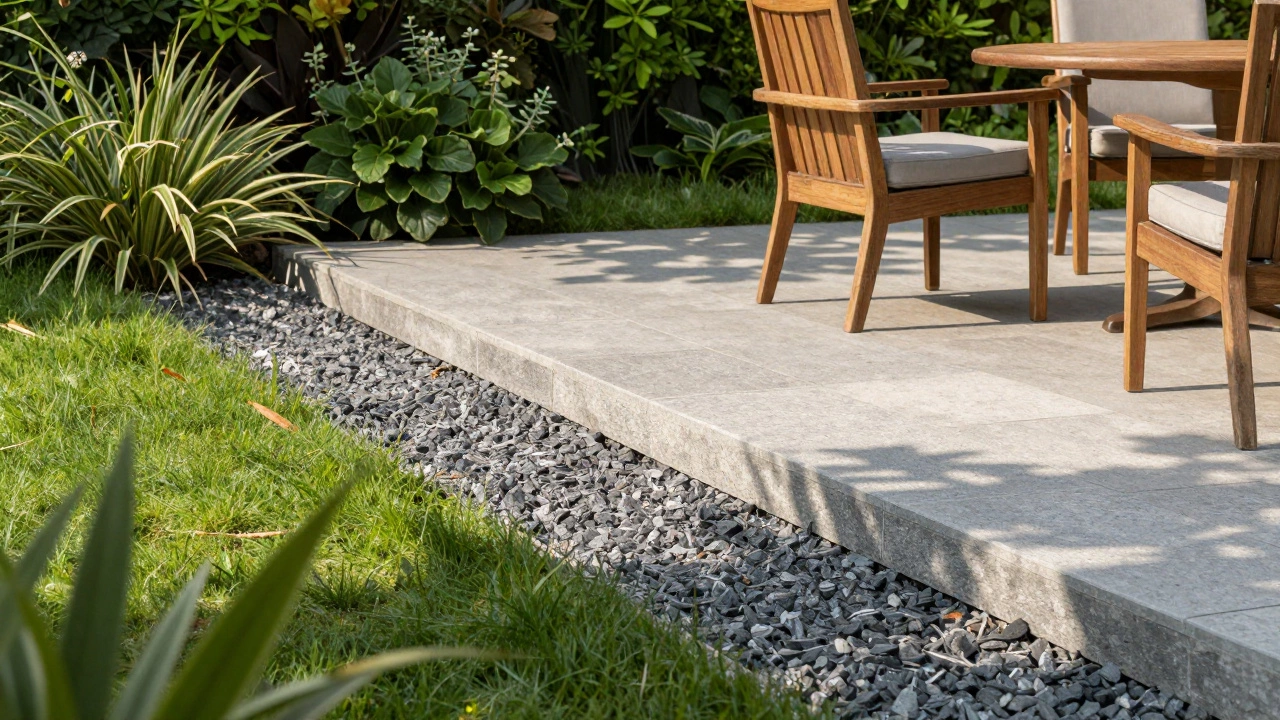
- If you have a garden bed next to your patio, install a 6-inch-wide strip of gravel or crushed stone between it and your furniture. Chiggers avoid dry, loose surfaces.
This isn’t just about looks. A clean perimeter cuts off their access route. One 2023 study from the University of Guelph found that patios with a 3-foot cleared zone saw a 78% drop in chigger encounters compared to those with no buffer.
Step 2: Treat your furniture surfaces
Chiggers cling to fabric, wicker, and wood fibers. You can’t eliminate them completely, but you can make your furniture a hostile environment.
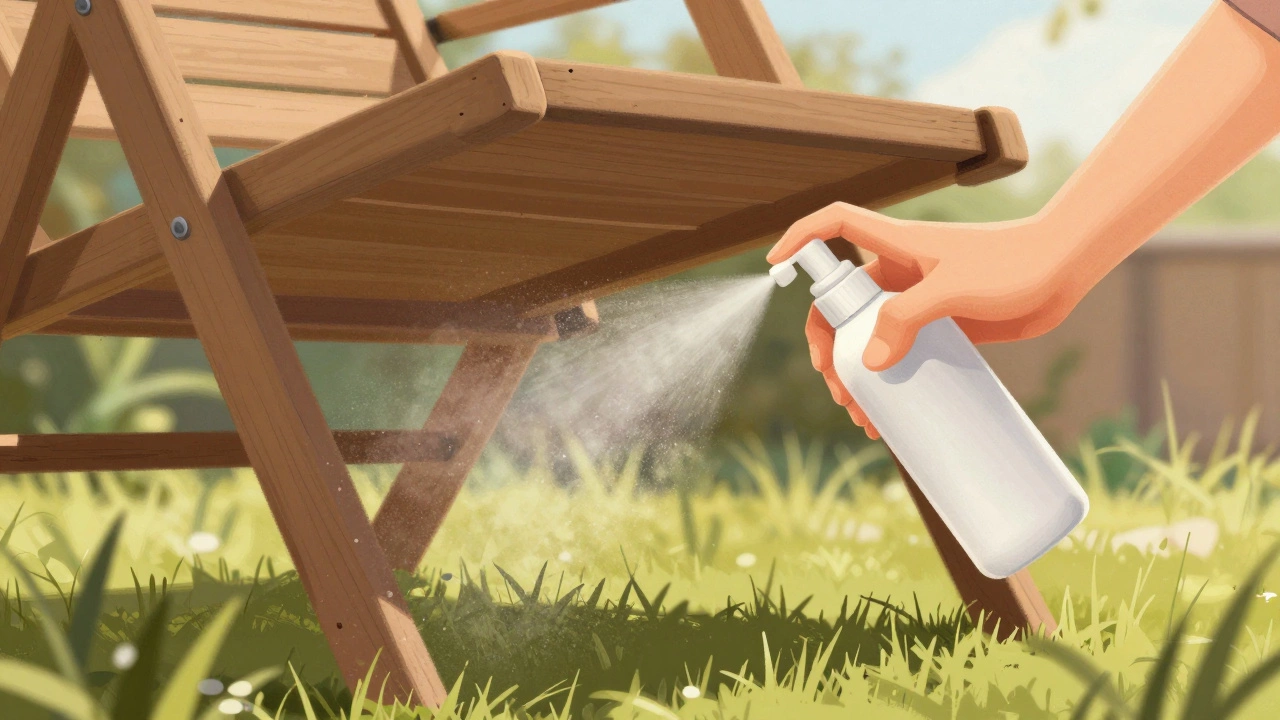
Use a pyrethrin-based outdoor spray-the kind labeled for ticks and mites. Look for products like Wondercide Outdoor Pest Control or Ortho Home Defense Insect Killer. Spray the underside of chairs, the crevices of cushions, and the legs. Avoid spraying directly on cushions unless the label says it’s safe for fabric. Instead, lift cushions and spray the frame beneath.
Apply every 2 to 3 weeks during peak season. Don’t wait for itching to start. Prevention beats treatment every time. One homeowner in Hamilton reported zero chigger bites for 14 weeks after applying pyrethrin spray monthly, even with heavy yard use.
For wood furniture, wipe down surfaces with a solution of 1 part white vinegar to 3 parts water. Vinegar disrupts chigger scent trails and dries out their environment. Do this once a week after rain or watering.
Step 3: Choose the right cushions and covers
Not all outdoor cushions are created equal. Chiggers love porous, absorbent fabrics. Avoid cotton, linen, or uncoated polyester. Instead, go for:
- Solution-dyed acrylic fabrics (like Sunbrella)
- Waterproof vinyl or PVC-backed cushions
- Cushions with tightly woven, non-porous covers
These materials don’t hold moisture, don’t trap debris, and make it harder for chiggers to latch on. If you already have cushions, slip them into waterproof covers. You can find affordable ones at home improvement stores-they zip over existing cushions and wash easily.
Also, store cushions indoors overnight. Chiggers are most active in the early morning and late afternoon. If your cushions sit outside all night, they become overnight lodgings for mites.
Step 4: Wear smart clothing when using your patio
Chiggers don’t care about your furniture-they care about your skin. And they target exposed areas: ankles, wrists, waistbands. Here’s how to block them:
- Wear closed-toe shoes-no sandals. Even low-profile sneakers help.
- Tuck pants into socks. This creates a physical barrier.
- Use permethrin-treated clothing. You can buy socks, pants, or spray treatments (like Sawyer Permethrin) that last through 6 washes. Apply it to your clothes before going outside. It kills chiggers on contact.
- After sitting outside, shower immediately. Use hot water and soap. Scrub your legs and waist. Chiggers take hours to attach fully-showering within 2 hours can remove them before they bite.
Step 5: Use natural deterrents (if you prefer chemical-free options)
If you’d rather avoid sprays, there are natural alternatives that still work.
- Plant marigolds, lavender, or citronella around your patio. Their scent confuses chiggers and repels them. Don’t plant them too close-put them 5 feet away.
- Spread diatomaceous earth (food-grade) along the edge of your patio. It’s a fine powder made from fossilized algae. It cuts through the mites’ waxy outer layer, drying them out. Reapply after rain.
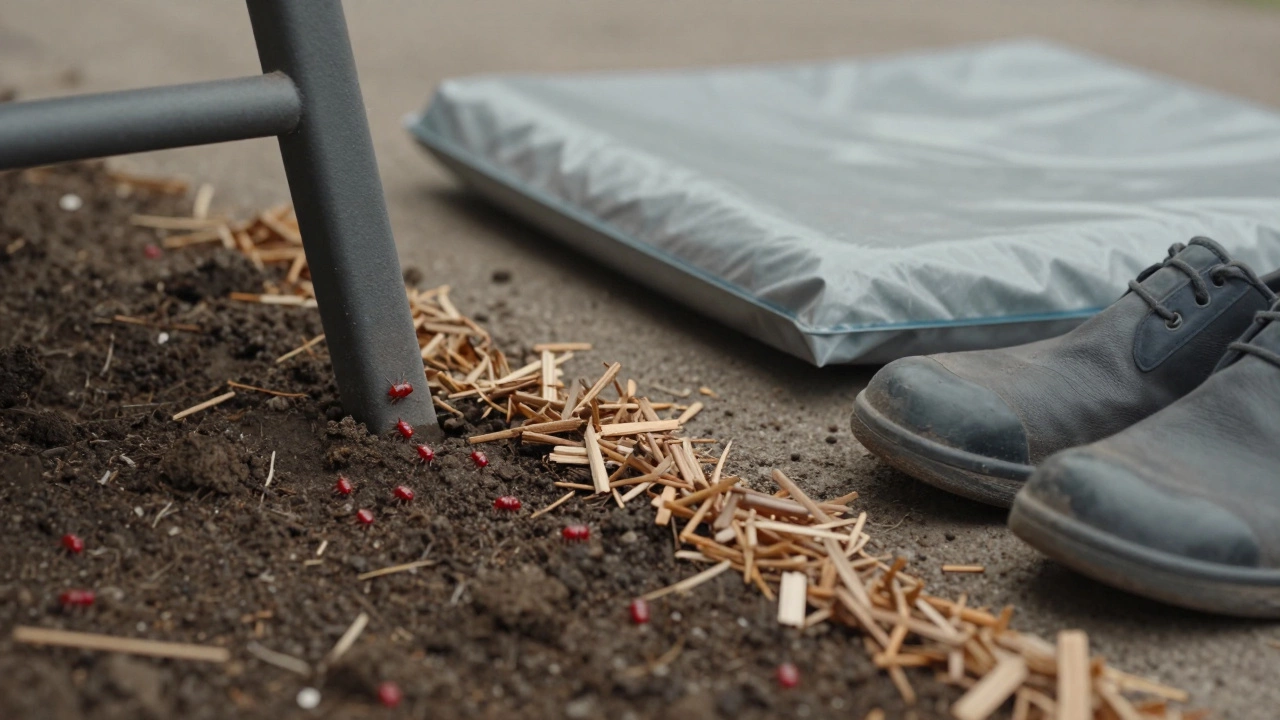
- Use cedar wood chips in your buffer zone. Cedar oil is a known insect repellent, and the chips release it slowly over time.
These won’t eliminate chiggers, but they reduce their numbers. Combine them with the other steps for best results.
What doesn’t work
Don’t waste time on these myths:
- Essential oils alone-lavender, tea tree, eucalyptus. They smell nice but don’t kill or repel chiggers long-term.
- DEET on furniture-it’s meant for skin. Spraying it on wood or fabric won’t help and can damage materials.
- Staying inside-chiggers don’t live indoors. But if you sit on your patio for 10 minutes, you’re already at risk.
- Washing furniture-you can’t wash away mites that are in the ground. Cleaning your cushions helps, but if the soil around it is infested, they’ll come back.
What to do if you get bitten
It’s not the bite itself-it’s the reaction. The itching can last days. Here’s what helps:
- Take an antihistamine like cetirizine (Zyrtec) to reduce swelling and itching.
- Apply hydrocortisone cream (1%) twice daily.
- Use a cold compress or calamine lotion to soothe the skin.
- Don’t scratch. Breaking the skin leads to infection.
Most bites heal on their own in 1 to 2 weeks. If a welt turns red, warm, or oozes, see a doctor-it could be infected.
Can chiggers live in patio furniture cushions?
No, chiggers don’t live or breed in cushions. They’re temporary hitchhikers. They crawl up from the ground, land on your furniture, and then onto your skin. If you store cushions indoors and clean them regularly, you’ll rarely have a problem.
How often should I spray my patio furniture?
Spray every 2 to 3 weeks during spring and early summer, especially after rain or heavy watering. After July, chigger activity drops sharply in southern Ontario, so you can stop unless you live near wetlands or dense brush.
Are chiggers only a problem in the spring?
In southern Ontario, yes-peak activity is April through June. Chigger larvae need warm, humid soil to survive. Once temperatures consistently hit 20°C (68°F) and the ground dries out, they die off. But if your yard stays damp from irrigation or poor drainage, you might see occasional activity into July.
Can I use insect repellent on my outdoor furniture?
Avoid DEET or other skin repellents on furniture. They’re not designed for it and can damage fabric, wood, or metal. Use pyrethrin-based sprays instead-they’re safe for outdoor surfaces and effective against mites.
Is it safe to use diatomaceous earth around my patio?
Yes, if you use food-grade diatomaceous earth. It’s non-toxic to humans and pets. Just avoid inhaling the dust when applying. Spread it in a thin layer along the edge of your patio, not on seating surfaces. Reapply after rain.
If you’ve been dealing with chiggers for years, this isn’t magic-but it’s science. Clear the zone, treat the surfaces, choose smart materials, and protect your skin. Do those five things, and your patio will stay itch-free. No more guessing. No more scratching. Just quiet evenings on your own furniture, enjoying the outdoors the way they’re meant to be.